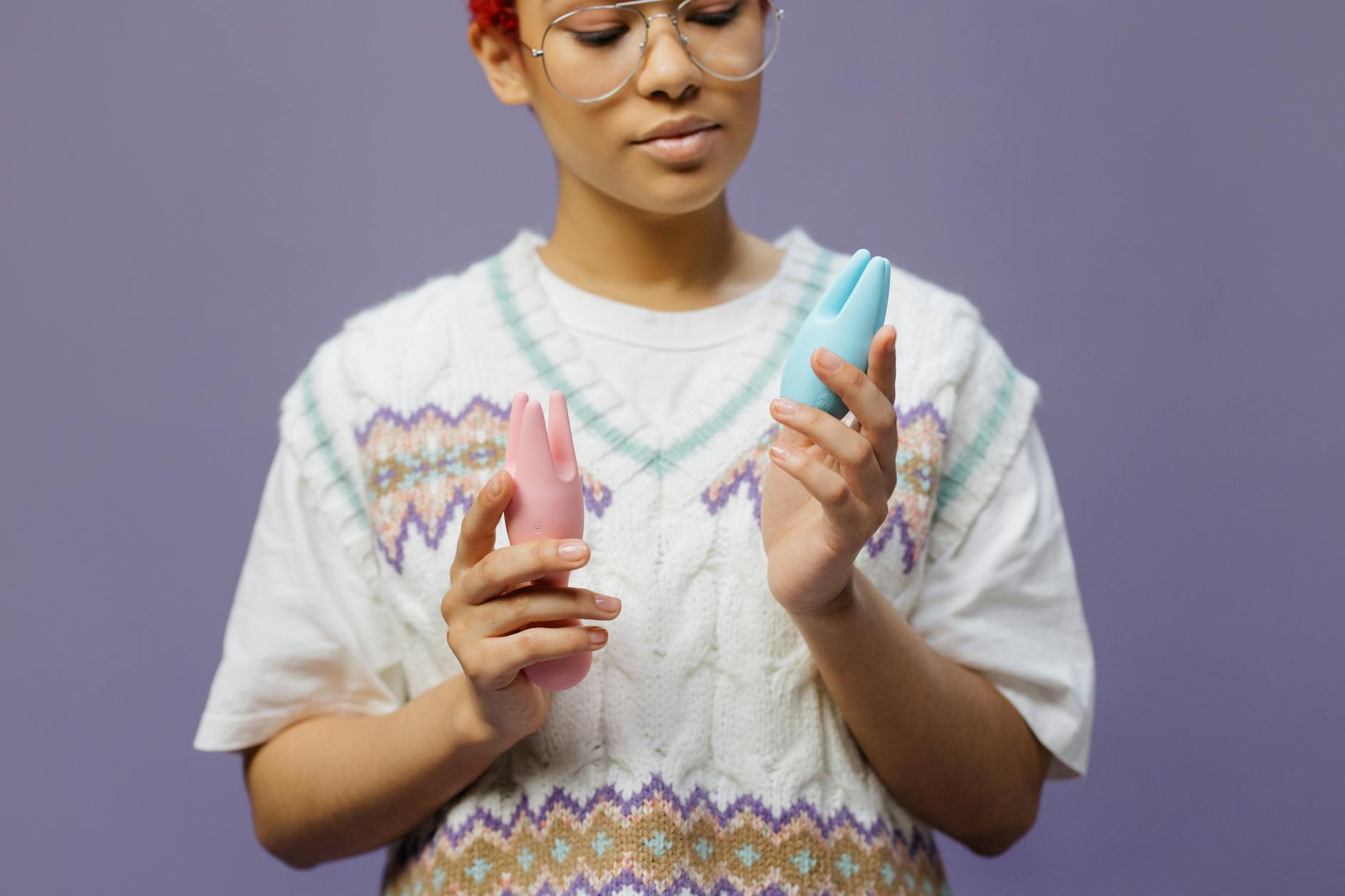
Here's what you're actually experiencing
Your body changes when your partner is present. Your clitoral response slows down, sensation dulls, or arousal stalls completely. This isn't a personal failure or a sign your relationship is broken. It's neurobiology meeting psychology, and it's one of the most common friction points couples face.
When someone else is in the room (or touching you), your nervous system activates a mild threat response. Your brain is monitoring. Evaluating. Checking whether it's truly safe to abandon control. Even in the best, most trusting relationships, this protective mechanism fires up. You might orgasm alone in 10 minutes and not reach it at all with your partner present.
Why your clitoral response shifts
Three systems are working against each other when you're with a partner.
The first is attention. Pleasure requires focus. When you're alone with a vibrator, your brain can narrow onto sensation without interruption. The moment your partner is present, even if they're being perfectly supportive, your attention splits. You're monitoring their pleasure, their comfort, whether they're judging you. This cognitive load kills arousal faster than anything else.
The second is the nervous system. Your body doesn't distinguish between "threat from a predator" and "vulnerability in front of someone I love." Both activate the same protective circuitry. Your clitoris literally responds to safety. When you feel watched or evaluated, even subconsciously, blood flow decreases and sensation dulls. This is automatic. Not a choice.
The third is shame or performance anxiety. Many people have internalized the message that their body, their desires, or their response "should" work a certain way when someone else is present. If you grew up with any messaging that pleasure is private, or that needing a vibrator means something is wrong with you, your body holds that tension. Tension kills pleasure.
The Lem vibrator is particularly useful here because it delivers stimulation without requiring you to perform arousal. You can focus inward while your partner is present.
The solo-first foundation
Before you use the Lem with your partner, you need a clear baseline of what works for you alone.
Spend 2-3 weeks using your vibrator solo, without any pressure to orgasm. This isn't about achievement. You're mapping what your body needs, what speeds activate you, what patterns feel best, what pressure level gets you there fastest.
Test the Lem's settings. Does pattern 1 feel too gentle and you skip to 4? Does the highest setting make you numb out? Notice where the sweet spot is. You're building a reference point that says: "This setting, at this pressure, with this mental focus, works for me."
When you can do that alone, your nervous system has proof that pleasure is possible. Your body remembers the path. That matters when your partner enters the picture.
The conversation before you use it together
Do not just pull out the Lem during sex and hope your partner understands.
Talk to them first. Not during sex, not in bed, but during a calm conversation. Say something like: "My body responds differently when we're together than when I'm alone. It's not about you. I want to use my vibrator with you so we can figure this out together. I might need some space in my head, and I'll tell you what I need."
Then be specific about what "space in my head" means. Do you need them to stay still? Stay quiet? Look somewhere else? Stay present but not touching you? Make it concrete, not mysterious.
Most partners actually feel relieved by this. They're often anxious too, worried they're not enough, wondering what they're doing wrong. When you name the actual limitation (your nervous system, not their performance), the pressure on both of you drops.
How to use the Lem together
Start with you controlling it.
Dim the lights. Position yourself so you can focus inward without your partner's face directly in your line of sight. Let them be present beside you, not over you. You might sit up, or lie on your side, or any position that feels enclosed.
Begin with the same settings you know work alone. Lower intensity than you think you need. Start with your hand. Breathe. Use the vibrator at a pattern you've already tested.
Your partner should stay quiet unless you ask them to talk. No "is this working?" No performance commentary. They can hold your hand. They can breathe with you. But the focus is yours.
The first time together, don't aim for orgasm. Just aim for arousal. Can you feel pleasure? Can you focus on sensation for five minutes? That's success.
What to do if sensation still disappears
If you're using the Lem and your clitoral sensitivity just evaporates the moment your partner touches you, the issue is deeper than the vibrator.
Try this: ask your partner to leave the room. Not forever. Just for the first five minutes. Use the Lem alone until you reach the point where you feel genuinely aroused. Then ask them back in. They re-enter a nervous system that's already in pleasure mode, not one that's trying to shift from threat-mode to pleasure-mode.
Once your body has the memory of arousal with them present, it becomes easier to get there next time. You're teaching your nervous system that pleasure is compatible with their presence.
If your partner has a hard time leaving the room, or if you feel pressure to perform as soon as they return, that's a relationship conversation, not a vibrator problem. You might benefit from working with a couples therapist who specializes in intimacy. There are barriers to safety that no lemon vibrator can solve alone.
The long game
Using a Lem vibrator with your partner isn't about fixing a broken response. It's about rebuilding trust between your nervous system and the experience of being vulnerable in front of someone else.
Over time, your body learns that pleasure and partnership can coexist. That sensation is possible even when you're not in control of every variable. That your partner can witness your pleasure without judgment.
That shift changes everything else. Not just sex. The ability to be fully present in front of someone, including your own needs, shifts how you show up in the entire relationship.
Start where you are. Use what you know works. Communicate clearly. And give your nervous system time.
People also ask
Why do I lose sensation the second my partner touches me?
Your nervous system is monitoring safety. When you're alone, your brain can relax into pleasure. With a partner present, even a trusted one, your nervous system does a subtle threat assessment. This isn't rational and it's not your fault. It's a protective mechanism. The more you can communicate what you need (distance, silence, specific touch), the faster your body learns that presence is safe.
Can I use a Lem vibrator if I've never used toys with a partner before?
Absolutely. In fact, starting with a tool like the Lem can make the first experience less charged. Instead of it being "let me show you what I need," it becomes "let's explore this together." The vibrator becomes a neutral third thing you're both learning about, which takes some pressure off the vulnerability.
What if my partner feels insecure about me needing a vibrator?
That's a common fear, but it's based on a myth. Needing a vibrator doesn't mean your partner isn't enough. It means your clitoral response requires a specific kind of stimulation that hands, friction, or penis alone can't replicate. Many people need glasses to see clearly. Glasses don't mean their eyes are broken. A vibrator doesn't mean your pleasure is broken.
Have the conversation where you explain this directly. Say: "My body works differently than porn suggests. I need specific stimulation to reach orgasm. Using this vibrator with you is me choosing intimacy with you, not replacing you."
Should I orgasm during partnered sex or is solo orgasm with a vibrator enough?
Both are valid. Some people orgasm during penetration or partner sex. Some people only orgasm with a vibrator. Some people enjoy pleasure without orgasm. There's no correct version. What matters is that you both feel satisfied and connected. If you need a vibrator to orgasm and your partner needs that to feel close, you've found the right solution. If your partner resents it, that's worth exploring in couples therapy.
How long does it take to feel comfortable using a vibrator with my partner?
Every nervous system is different. Some people feel comfortable in a few weeks. Others take months. Don't rush it. The goal isn't speed. It's rebuilding the link between pleasure and safety in partnership. Keep communication open and stay patient with yourself.
Is it normal for clitoral pleasure to feel numb when my partner is present?
Yes. It's one of the most underreported experiences because people assume they're broken. You're not. Your nervous system is doing exactly what it evolved to do: protect you from vulnerability. Using the Lem, starting solo, and building confidence gradually helps your body learn that pleasure and partnership can coexist.
The next step
If you're struggling with clitoral sensation or pleasure with your partner, you're not alone, and it's absolutely solvable. Start with how to use a Lem vibrator when clitoral arousal takes extra time to build your baseline solo. Then move toward using a lemon vibrator with a partner when you're both new to toys for a guided approach to partnership exploration.
If the barrier feels deeper than sensation, or if your partner's reaction is causing you pain, reach out. Contact us to chat about what might help, or consider working with a couples therapist who specializes in sexual health and intimacy. Your pleasure matters, and it's worth the conversation.