
Let's get real about arousal timing
Honestly, one of the first things I tell couples in my practice is this: if you think arousal should happen in five minutes, you've been watching the wrong movies. Clitoral arousal that takes fifteen, twenty, even thirty minutes to build isn't a problem. It's the actual normal for most people, and it becomes even more common as you move through your thirties, forties, and beyond.
The problem isn't the timing. The problem is that we've normalized the sprint and pathologized the slow burn.
When you're with a partner, slower arousal gets tangled up in performance anxiety. When you're alone, it gets tangled up in impatience. Either way, the solution isn't to rush yourself. It's to understand what's actually happening in your body and use tools like the lemon clitoral vibrator in a way that works with your timeline, not against it.
Why clitoral arousal takes longer sometimes
There are about seven reasons this happens, and most of them are completely normal.
Stress and nervous system load. Your brain is the primary sex organ, full stop. If you're running through a mental to-do list, anxious about being on time, or managing low-level relationship tension, your nervous system stays in fight-or-flight mode. Blood doesn't flow to your clitoris the way it should. Arousal can't build because your body is literally busy doing something else.
Life stage. If you're in a demanding career phase, parenting young kids, managing aging parents, or navigating a major transition, your baseline cortisol is higher. That changes everything downstream, including how quickly sensation registers and how easily arousal compounds.
Medication and hormonal shifts. Antidepressants, birth control, thyroid medication, and other drugs can absolutely affect arousal speed. So can menstrual cycle phase, perimenopause, and menopause. This isn't failure. It's pharmacology and biology.
Attention and focus. Some people need mental continuity to build arousal. If you're starting and stopping, checking your phone, or getting interrupted, you're literally rebuilding from zero each time. It's like trying to boil water on medium heat. You'll get there eventually, but not quickly.
Relationship dynamics. If there's unresolved tension with a partner, even quiet tension, your body knows. Even if your mind doesn't. Trust and emotional safety directly impact vasocongestion and arousal trajectory.
Age and tissue changes. If you're post-menopausal or in late perimenopause, tissues respond more slowly, blood flow is different, and the whole process naturally takes longer. This isn't decline. It's recalibration.
Perfectly normal variation. Some people are slow arousers. Full stop. No reason required. It's not a medical issue or a psychological one. It's just how their body works.
What slowing down actually does for your body
I want to reframe this because it matters: extended arousal isn't foreplay. It's the main event.
When you give your body twenty or thirty minutes to warm up, several things happen. Blood flow increases gradually to the clitoris and vulva. The vaginal opening relaxes. The clitoral glans (the visible tip) becomes more engorged, making it more sensitive. Lubrication increases. The entire pelvic floor has time to shift from holding tension to readiness.
You're not waiting to have sex. You're actually building a much richer sensation landscape. People who rush through this phase often report that orgasm feels shallow or distant. People who give it time often report that orgasm is deeper, more full-body, more satisfying.
So the first rule: stop treating slow arousal like an obstacle to get past. Treat it like the thing itself.
How to structure extended arousal with a lemon vibrator
Here's the practical architecture I recommend.
Phase one: sensory warm-up (5-10 minutes). Start with the Lem vibrator on the lowest setting. Touch your inner thighs, lower belly, and the outer vulva first. Not direct clitoral contact yet. You're waking up nerve endings and getting blood flowing to the area. This is not about intensity. It's about noticing. Some people find this phase happens better with eyes closed, some with music, some with a partner present but quiet.
Phase two: clitoral approach (5-10 minutes). Move the vibrator to the clitoral area, still on a low setting. You can circle around the clitoris rather than directly on it. The clitoris has over 8,000 nerve endings concentrated in a tiny area, so indirect stimulation often feels better at this phase. The goal here is consistency, not change. Keep the same pattern, same pressure, same rhythm. Let arousal compound.
Phase three: intensification (10-15 minutes). Once you feel arousal building (you'll know: warmth, deeper breathing, pulse changes, maybe slight moisture), you can begin to shift. Increase the lemon vibrator's intensity incrementally, or change the pattern. This is where sensation deepens and orgasm starts to feel possible rather than theoretical.
Phase four: sustained attention (5-10 minutes or however long). Once you're in the window where orgasm feels accessible, you have choices. Some people want to stay at a stable intensity and let it build. Some people want micro-variations. Some people want to layer in breathing work or pelvic floor engagement. The lemon clitoral vibrator is flexible here because it's not a jackhammer. It gives you fine control.
Why lemon vibrators work particularly well for longer arousal cycles
Most vibrators are high-frequency. They buzz fast. For someone who needs time to build, that frequency can feel scattered or even overstimulating early in the process. It's like turning on a spotlight before your eyes adjust to the dark.
The Lem uses a different mechanism: air-pulse suction. It creates a rhythmic pressure wave against the clitoris rather than vibration. For extended arousal, this has two major advantages.
One: you can start incredibly low. You're not choosing between "off" and "intense." You can set it to a gentle pulse that feels more like presence than stimulation. That's the sweet spot for phase one and two.
Two: the sensation compound differently. Suction-based stimulation tends to build pleasure in a wave pattern. You feel it rise, crest slightly, then rise again. That natural pulsing mirrors how arousal actually works in the body. It's not fighting your physiology. It's moving with it.
For how to use lemon vibrators when you've never owned a toy before, I'd recommend this same phased approach regardless of your baseline arousal speed. But if you specifically have a slower arousal pattern, the lemon vibrator's graduated intensity and suction mechanism make it almost ideal.
The partner dimension
If you're with someone and your arousal timing mismatches theirs, there are a few moves.
First: talk about it outside the bedroom. Not during sex. Say something like, "I need more time to warm up than I used to, and I want to enjoy that instead of rushing. How do you feel about that?" You're naming it as a fact, not a problem. This matters because it shifts the frame from "something's wrong with me" to "here's how my body works."
Second: integrate the lemon vibrator as part of partnered foreplay, not instead of it. Your partner can be doing other things. They're not passive. Touch you while you're using the vibrator. Kiss you. Talk. Make eye contact. The vibrator is a tool you're using together, not a replacement for contact.
Third: get clear on what comes after. If you need thirty minutes of arousal and your partner wants penetration at minute fifteen, that's a conversation about what sex actually is for you two. Sometimes the answer is "thirty minutes of clitoral pleasure and that's the main event, penetration optional." Sometimes it's "I use the vibrator while you do other things, then we shift." There's no universal answer. But clarity eliminates resentment.
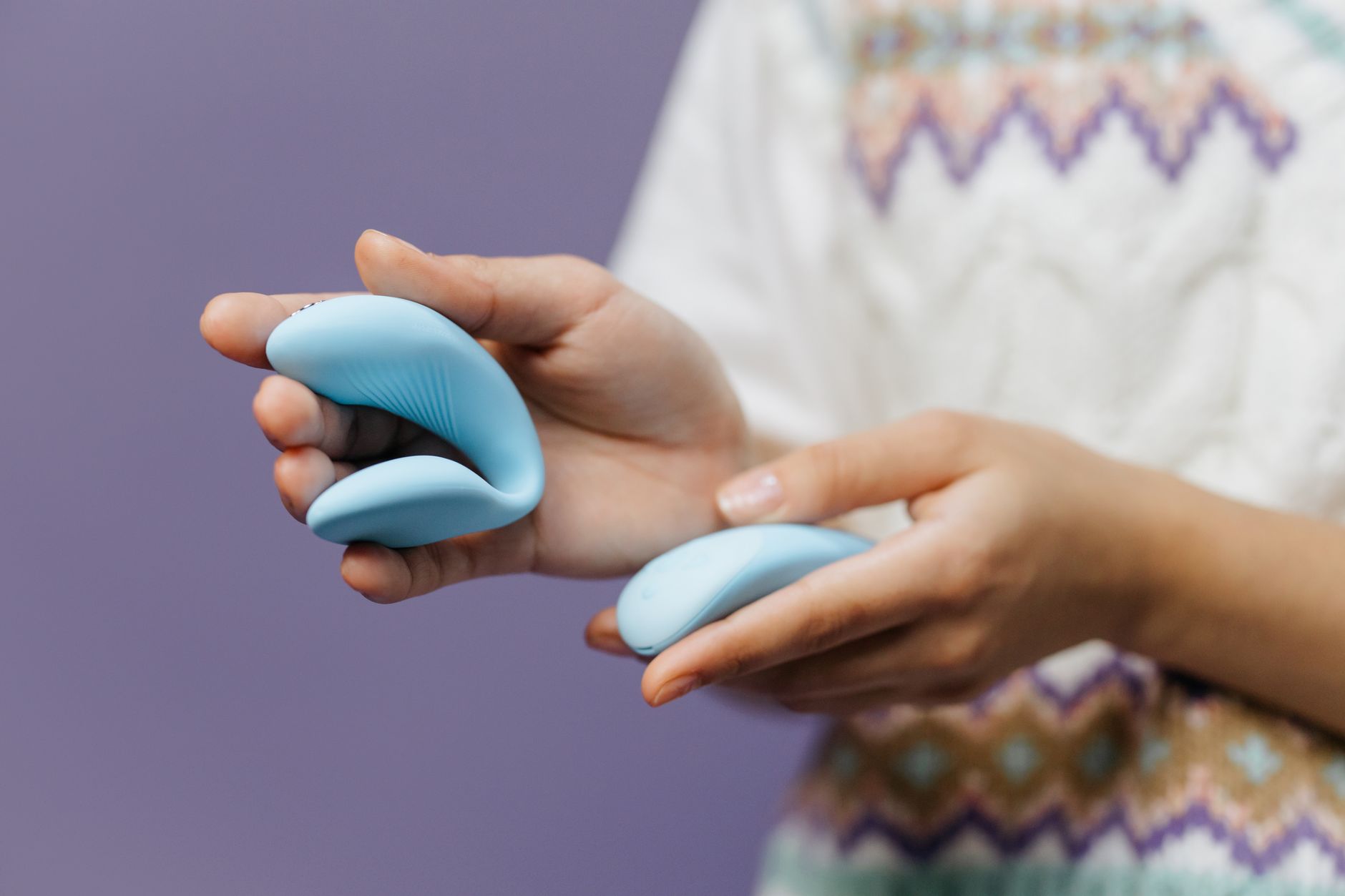
Photo by cottonbro studio on Pexels
Alone and wanting to honor the timeline
When you're solo, the pressure feels different but it's still there. You might feel like you should be able to "finish" in some arbitrary timeframe. You might feel impatient with yourself. You might think about other things you need to do.
Here's what I tell people: you're not trying to squeeze pleasure into your schedule. You're deciding that pleasure deserves the time it needs.
Set a boundary before you start. If you have thirty minutes, say that to yourself. Not as a deadline, but as permission. "I have thirty minutes and I'm going to use all of it." Then put your phone in another room. Close the door. Lie down. Start the lemon vibrator on setting one and actually notice what you're feeling. Not think about it. Notice it.
Most people who complain about slow arousal are actually moving too fast. They're jumping from setting one to setting five because they're anxious about the time. But that's exactly what keeps arousal from compounding. The invitation here is to slow down the arousal process itself, not the time you're willing to give it.
Common questions when arousal takes longer
Is this a sign of low libido? Not necessarily. Libido is desire. Arousal is physical response. You can have high libido and slow arousal, or low libido and fast arousal. They're different systems. Slow arousal with a high libido just means you want sex and it takes time to get your body ready. That's actually really common.
Should I be worried this is getting worse as I age? Probably not. Most of the slowdown people notice in their thirties and forties is stress and life circumstance, not aging itself. And honestly, some of it is your body becoming more intelligent. It's not going to rush into something it's not ready for. That's a feature, not a bug.
What if my partner doesn't have patience for this? That's worth examining. Partnership includes accepting how your partner's body works. If someone consistently gets frustrated with your arousal timeline, that's about their capacity, not your body's failure. That might be a conversation with a couples counselor or therapist.
Does everyone benefit from extended arousal time? No. Some people genuinely do warm up fast and feel great. They're not superior. You're not inferior. You're just different. The goal is matching your practice to your body's actual pace.
Can I speed up my arousal if I really want to? Sometimes. Stress reduction, exercise, better sleep, addressing medication side effects, and sexual practice all help. But "speed up" should never be the goal if your current pace is working. The goal is "feel good and have satisfying sex." If that's already happening, your pace is perfect.
The quiet shift this creates
Once you stop treating slower arousal as something to overcome and start treating it as information about how to have better sex, everything shifts. You're not fighting your body. You're reading it.
You notice phases. You understand that you need twenty minutes of sensory attention before direct stimulation. You know that your partner touching you while you use the Lem creates a different kind of arousal than using it alone. You recognize that some days you're slower because you're stressed, and that's okay. You grab an extra fifteen minutes. You do the work.
This is where sex stops being something you're trying to "achieve" and starts being something you actually experience. And that, genuinely, changes everything.
FAQ
Why does clitoral arousal take longer with a partner sometimes?
Nervous system activation plays a huge role. Even if you logically trust your partner, your body can pick up on subtle tension, distraction, or disconnection. Fear of judgment slows arousal. Feeling rushed slows arousal. Lack of foreplay or mental attention slows arousal. All of this is normal and entirely addressable through communication, longer warm-up time, and presence.
Can antidepressants permanently slow down my arousal?
Most SSRI antidepressants do affect sexual response, including arousal speed and orgasm intensity. But this isn't permanent. Some people adapt over time. Others find that switching medication, adjusting dosage, or adding medication support (like bupropion) helps. This is absolutely worth discussing with your doctor.
Is there a difference between slow arousal and arousal dysfunction?
Yes. Slow arousal is a normal variation in how fast your body responds to stimulation. Arousal dysfunction (like genital arousal disorder) is when you want arousal to happen but your body doesn't show any physical signs even with sustained stimulation. If you're getting wet, your clitoris is engorging, and arousal is building, you just slowly, that's not dysfunction. That's timing.
Should I use numbing creams to speed things up?
No. Numbing creams reduce sensation, which is the opposite of what you want when building arousal. If sensation is too intense early on, the answer is gentler stimulation with something like the lemon clitoral vibrator on its lowest setting, not reducing sensation altogether.
Does the lemon sucker really help with slow arousal?
Yes, because of the mechanism. Suction-based stimulation creates a compounding sensation that mirrors natural arousal curves. It also gives you extremely fine control of intensity, so you can match exactly where you are in the arousal process. It's not magic, but it's genuinely well-designed for extended warm-up.
How do I communicate this to a partner without making it weird?
By naming it simply, outside the bedroom, and framing it as information about your body, not as a problem. Try: "I've realized I need more time to warm up than I thought. I actually enjoy that phase more when I'm not rushed. Want to figure out how that works for us?" You're inviting collaboration, not announcing a deficiency.
Slower arousal isn't a bug in your system. It's part of the actual architecture of pleasure. The invitation is to build your sexual practice around how you actually work, not around a fantasy timeline. With the right tool, the right frame, and the right partner or solo practice, extended arousal becomes one of the best parts.