Let's address the actual fear
You want to bring a lemon vibrator into bed with your partner, but something is holding you back. Maybe you're worried they'll feel replaced. Maybe you're afraid they'll think you're not satisfied. Maybe you're both excited but have no idea how to actually do this without it feeling clinical or weird. All of that is completely normal, and it's also entirely fixable.
Here's what I've learned from working with couples: the toy isn't the hard part. The conversation is. Once you get that right, the rest unfolds naturally.
Why the conversation matters more than the toy
Introducing any sexual tool, whether it's a lemon clitoral vibrator or something else, is really a conversation about desire, vulnerability, and trust. When you bring it up right, you're saying: "I want us to feel good together." When you bring it up wrong, your partner hears: "What we're doing isn't working."
Those are two completely different conversations, and the difference lives entirely in how you frame it.
If you walk in with a toy already purchased and suggest using it immediately, you risk him or her feeling ambushed or inadequate. If you frame it as exploration you want to do together, you're inviting partnership. The emotional setup determines whether this becomes a fun experiment or a source of tension.
The conversation: timing and framing
Pick a moment that is not during sex and not right before bed. You want both of you present, calm, and able to have a real conversation. This could be over coffee, on a walk, or during a quiet evening at home. The casual setting matters because it signals this isn't a Big Deal, even though it's important.
Here's a template that works: "I've been thinking about trying something together. I read about clitoral vibrators, and I'm curious what you'd think about exploring one together sometime. I'm not saying anything's wrong. I just think it could be fun for both of us, and I'd love to try it with you."
Notice what that does: it's honest, it's framed as curiosity rather than complaint, and it explicitly says "together." You're not making the toy the hero of the story. You are.
If they say no immediately, don't push. Ask why. Is it discomfort? Misinformation? A real boundary? Those all deserve different responses. Most of the time, hesitation comes from assumption, not genuine preference. Give them space to ask questions. Bring them a lemon vibrator's product page. Watch a couple of educational reviews together. Normalize it.
Why partners actually resist (and what helps)
Most resistance comes from one of three places:
Ego. He worries the vibrator means he's not enough. This one dissolves fastest with honest reassurance. "My body responds differently to external stimulation. That's not about you. It's about biology. And I want you there when it happens." Phrase it as addition, never replacement.
Discomfort. Your partner has shame around sex toys, or they've never used one and it feels unfamiliar. This is mostly about exposure. Share information. Show them the product. Explain that a lemon sucker like the Lem works through gentle suction, not harsh vibration. De-mystify it.
Real boundaries. Some people genuinely aren't interested in toys, and that's okay. If this is a hard no, the actual question is: can you use one alone, or together at a different time? Or is partnered sex non-negotiable for you? Those are worth discussing separately.
The first time: practical setup
Once you've talked and you both agree to try, don't make it a production. You're not performing. You're exploring.
Start clothed or partly clothed. Add it to foreplay, not as the main event. Let your partner touch you, kiss you, then introduce the lemon clitoral vibrator. Start at a low setting. You're teaching your body and your partner how you respond.
Here's the key thing: your partner should stay involved. They can hold the toy, or you can hold it while they're touching you elsewhere. They can watch your face, feel your body respond, stay connected to what's happening. This is where toys either become isolating or become intimate. The difference is attention.
Don't expect an orgasm. The first time is about getting comfortable, not achieving something. Pleasure is the goal, but often the real win is just "we did that together without it being weird."
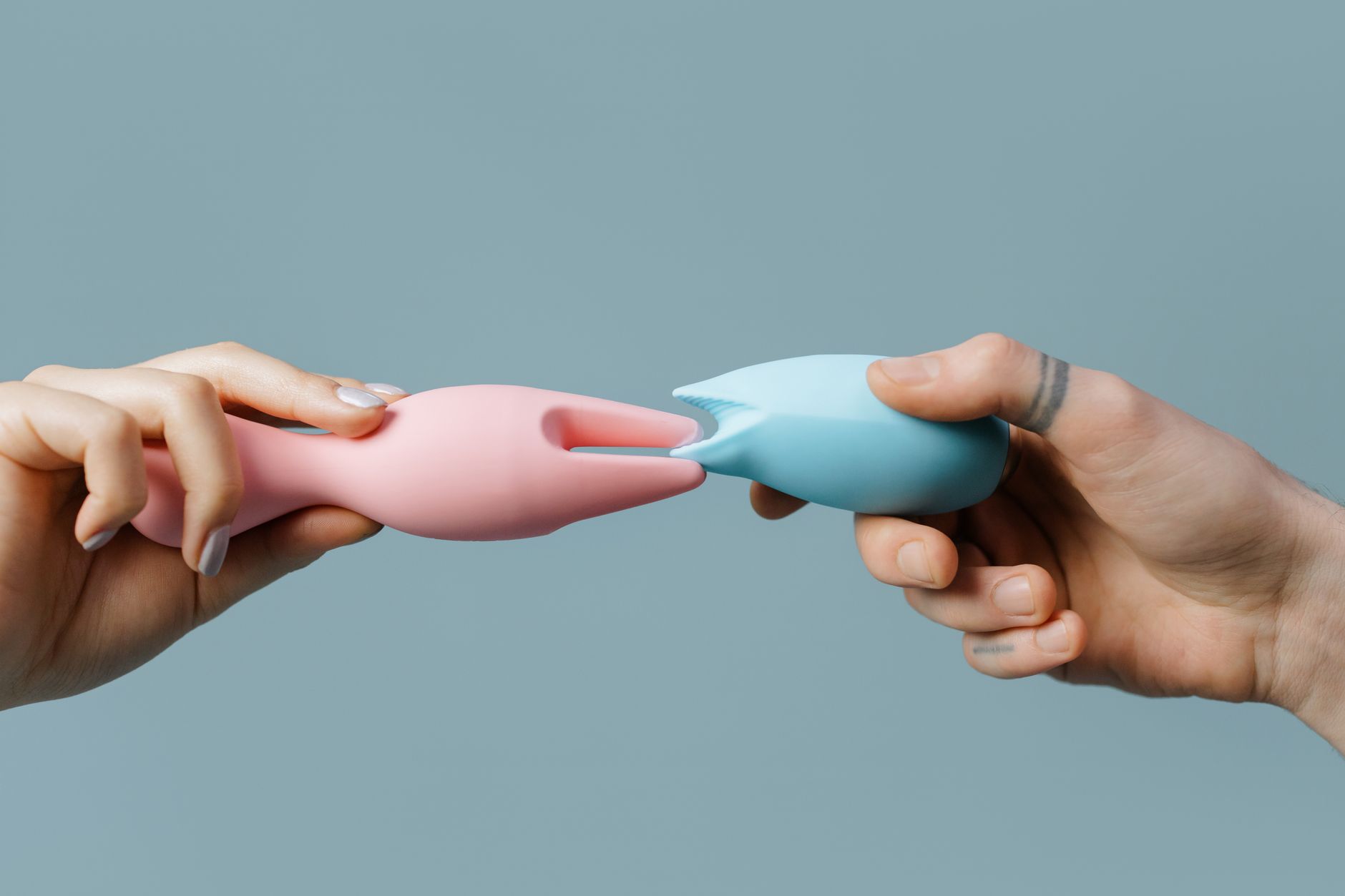
Photo by cottonbro studio on Pexels
What typically happens (and why it's fine)
The first time someone uses a clitoral vibrator with a partner, several things might occur:
It feels awkward. Yes. So did the first time you had sex with them. Awkward is normal. Do it again. By the third time, it usually feels less like an experiment and more like sex.
They take longer to orgasm than expected. The body needs time to adjust to a new sensation. This is not a failure. This is discovery. If you're both enjoying it, take the time.
You orgasm faster than before. Some people feel almost guilty about this. Don't. Your partner gets to feel what your pleasure looks like when it's this direct. That's not selfish. That's honest.
One of you gets a little self-conscious. This is where communication helps. You can pause and talk about it, or keep going and laugh a little. Both are fine.
After the first time: building a rhythm
The conversation after matters as much as the one before. Not a big analysis. Just: "That was nice. What did you think?" Listen to what they say. Adjust based on feedback.
If your partner enjoyed it, great. Consider what they liked. Did they like being involved in holding it? Did they like watching? Build on that. If they felt disconnected or uncomfortable, there's usually a simple fix. Maybe they need more involvement. Maybe you need a different position. Maybe the setting was too intense.
Over time, using a lemon vibrator together becomes just another part of your sexual vocabulary. It's not a novelty anymore. It's just something that feels good.
The role of the right toy
Not all vibrators work equally in partnered play. The Lem, for instance, uses gentle suction rather than intense vibration, which feels different and often easier to incorporate because it doesn't require as much positioning adjustment. If you choose a toy that suits what you're actually trying to do, the whole experience improves.
When you're shopping, think about how you'll actually use it. Are you imagining hands-free pleasure? A smaller toy might work better. Do you want your partner to be able to hold and control it? Something with an obvious grip matters. That practical thinking prevents disappointment.
The deeper thing that happens
Here's what I notice in my practice: couples who successfully introduce toys together almost always report deeper intimacy, not less. The conversation itself builds vulnerability. The shared experience builds trust. You're not hiding a desire anymore. You're exploring it together.
That's the real work. The lemon vibrator is just the vehicle.
People also ask
Will using a toy make my partner feel replaced or inadequate?
Only if you frame it that way. A vibrator does something your partner's body literally cannot do. It's not competition. It's addition. The reassurance he or she needs is ongoing, not a one-time conversation. Show them with your body and attention that they matter. Keep them involved. Most insecurity dissolves once someone realizes they're not being replaced, they're being invited deeper.
How do I bring this up if we've never talked about toys before?
Start with curiosity, not criticism. "I've been reading about this, and I'm interested" is very different from "I need this because you're not doing it for me." Pick a calm moment outside the bedroom. Make it a conversation, not an announcement. If they're hesitant, ask questions instead of pushing. Often people just need more information and time.
What if my partner says absolutely not?
Respect that. Then decide what that means for you. Can you use a toy alone? Can you revisit the conversation in a year? Or is this a compatibility issue that matters to you? Those are separate conversations worth having honestly. Sometimes "no" really does mean no, and sometimes it means "not yet" or "I don't understand it yet."
Should we use a toy every time we have sex?
No. Introduce it as one option among many. Sometimes you want it, sometimes you don't. Sometimes it's the whole event, sometimes it's foreplay. Flexibility keeps sex from feeling scripted. The toy works best when it's a choice, not a requirement.
How do I know if we're using it right?
There's no "right" in sex except what feels good to both of you. If it feels good, you're doing it right. If something feels off, pause and adjust. Communication during the experience (not just after) helps. "A little lower" or "softer" or "keep doing that" gives real-time feedback. That's how you learn each other.
What if we try it and it doesn't work?
It might not work the first time, or the second time. That's okay. Some couples find toys enhance their sex life immediately. Others need time. And honestly, some people try it and decide it's not their thing. Both outcomes are fine. The real win is that you tried something together without resentment.
The bigger picture
Using a lemon clitoral vibrator with your partner isn't really about the toy. It's about building a sexual relationship where both of you feel safe asking for what you want. It's about trust. It's about saying "my pleasure matters and so does yours." That conversation, and everything it opens up, is where the real intimacy lives.
Ready to explore further? Learn how to choose the right clitoral vibrator for your body and preferences, or if you're navigating other shifts in your shared pleasure, check out our guide on rebuilding physical intimacy after a break for couples navigating different timelines.
If you have questions about introducing toys or anything else, reach out. I'm here to help.