Let's start with what matters most
Recovering from pelvic pain or sexual trauma is not a linear process. Some days your body feels open and receptive. Other days, even the thought of touch can feel overwhelming. That's not a setback. That's normal. And it's why using a tool like the Lem vibrator during recovery requires patience, boundaries, and a clear understanding of what "pleasure" actually means while you're healing.
The good news: pleasure doesn't stop during recovery. It transforms. And often, reclaiming it becomes one of the most powerful parts of healing.
Why the Lem works differently for trauma recovery
Most vibrators require you to make decisions during arousal. Pressure, speed, angle, duration. When you're recovering from pelvic trauma or pain, decision fatigue during intimacy can feel like another loss of control. The Lem's air-suction design is different. Once you find the right pattern and rhythm, your job becomes simple: stay present.
That's it. No adjusting, no pressure increases. The suction creates a gentle, non-invasive stimulation that many people recovering from pain describe as "soothing" rather than "intense." Your nervous system can relax into it instead of bracing.
Additionally, suction vibrators don't require direct friction on sensitive tissue. If you're dealing with vulvodynia, endometriosis scars, or post-traumatic sensation sensitivity, the Lem's contact pattern is gentler and often more tolerable than traditional vibrator designs.
The pre-use conversation you need to have with yourself
Before you touch the Lem at all, answer these three questions honestly:
Do I feel safe right now? Safety is the foundation. If you're in an unsafe relationship, unsafe housing, or carrying acute trauma, pleasure tools are not the priority. Your safety is. Reach out to a counselor, trusted friend, or a helpline. Pleasure will still be there after you're safe.
What am I hoping pleasure will feel like? Don't skip this one. For some people recovering from trauma, pleasure feels softer, slower, less intense than before. For others, the ability to feel anything is the goal. Let your recovery define what success looks like, not some external idea of what arousal should be.
Do I have permission to stop whenever I want? This is critical. Building a sense of agency and choice is central to trauma recovery. You need to know, absolutely, that you can pause or stop without explaining, without guilt, without negotiation. Practice saying the words aloud: "I can stop whenever I want." Hear it. Believe it.
Setting up your environment for reclaiming touch
Three things matter here:
Privacy without isolation. Lock the door if you live with others. Make sure you won't be interrupted. But also, if being completely alone feels unsafe or triggering, that's okay too. Some people recover better knowing a trusted partner is in the next room. Some prefer a phone call with a friend on speaker nearby. Design the environment around your nervous system, not someone else's.
Temperature and comfort. Trauma often lives in the body as tension. Warm blankets, soft lighting, a comfortable position that doesn't strain your hips or back. If you're recovering from pelvic pain, lying flat on your back might trigger memories of medical exams or assault. Try side-lying, propped up on pillows, or sitting upright. Your comfort position is not your old comfort position. Find a new one.
No agenda. This is the hardest one. You're not trying to reach orgasm. You're not trying to prove you're healed. You're exploring what pleasure can feel like right now, in this specific body, on this specific day. Some sessions will be 45 minutes. Some will be 5. Both are complete.
How to start using the Lem safely during recovery
Day one is not about pleasure. It's about familiarity.
Step 1: Hold the device. Pick it up. Feel the weight, the curve, the texture. Does it feel okay in your hand? Does holding it trigger anything? If yes, that's information. You're not broken. Your nervous system is protecting you. Put it down and come back later, or sit with the feeling for a moment. Either choice is right.
Step 2: Turn it on at the lowest setting without any contact. Listen to the sound. Feel the vibration in your hand. Get used to what it does when there's no pressure involved.
Step 3: Apply it to a neutral area first. Your inner wrist, your forearm, the inside of your thigh. Somewhere that's sensitive but not sexually triggering. Feel the sensation. Notice if it's overwhelming, pleasant, neutral, uncomfortable.
Step 4: Take a break. Seriously. That's enough for day one.
On subsequent days, you can gradually move toward the vulva, but only if each step feels okay. There's no timeline. Some people spend a week just holding it. Some are ready for direct contact on day two. Listen to your body.
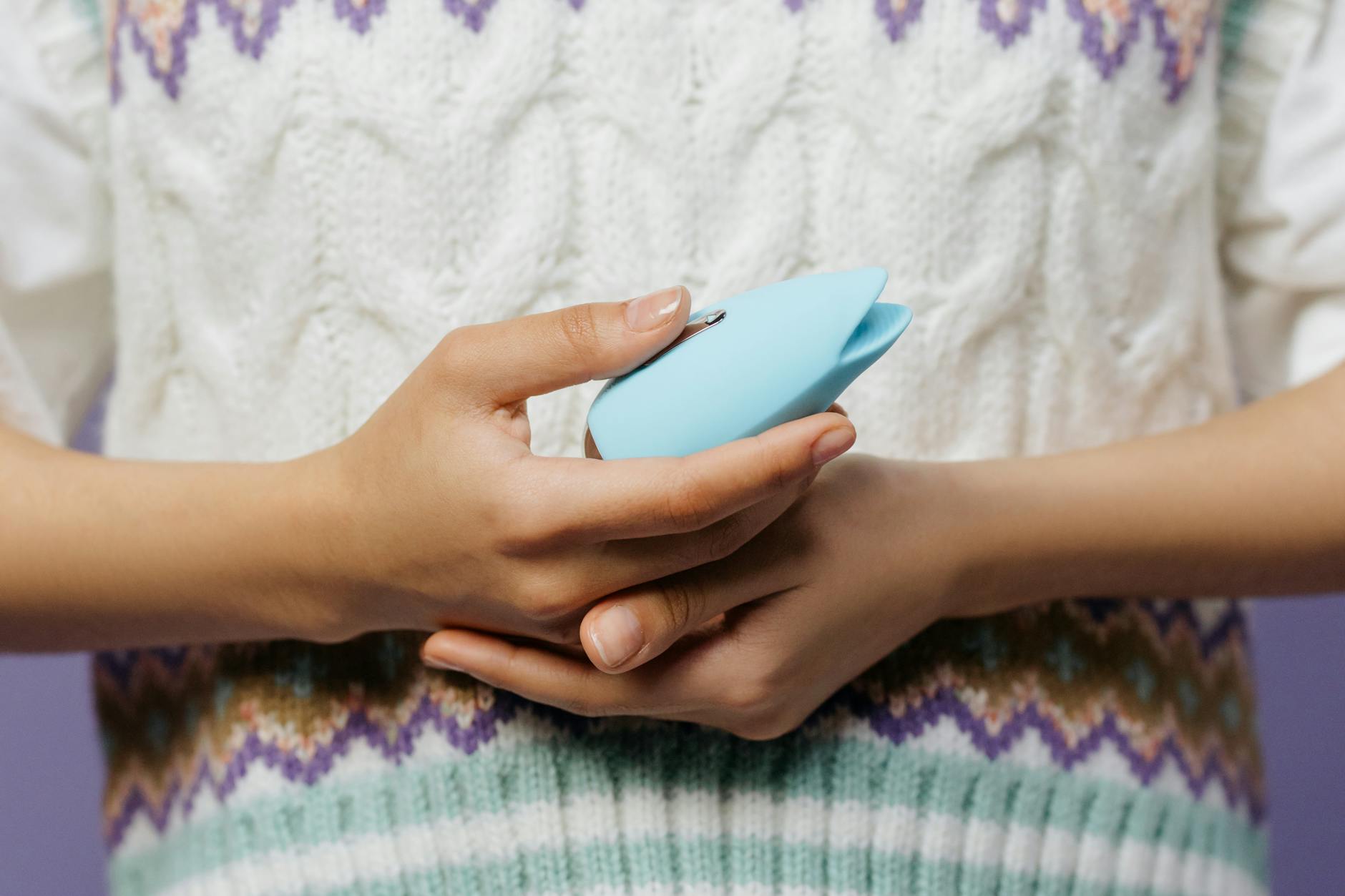
Photo by cottonbro studio on Pexels
Finding your safety settings
Once you're ready for direct contact, start with patterns 1-3 only. These are the gentlest. You're not saving the strong ones for later. You're finding what pattern your nervous system can relax into.
Many people recovering from trauma prefer patterns that feel rhythmic and predictable. If the Lem suddenly changes intensity, it can feel like a loss of control. Some survivors find that repetitive, consistent stimulation feels soothing and grounding.
If at any moment a pattern feels startling, overwhelming, or triggering, stop immediately. Don't push through. That's not healing. That's re-traumatizing. You deserve better.
When sensation comes back unevenly
Recovery from pelvic trauma often brings uneven sensation. Your left side might feel fine while your right side stays numb. You might have intense feeling on the outer vulva but deadness inside. You might be fine one day and hypersensitive the next.
This is normal. It's your nervous system slowly learning to trust sensation again. Use the Lem on the areas that feel safe. Avoid the areas that don't. As recovery progresses, your sensory map will shift and change. The Lem can go wherever feels good today.
The role of breathwork and grounding
During recovery, your nervous system can shift into fight-or-flight mode without warning. Pleasure sometimes reactivates that old protective pattern. When it does, breathing helps. Before you use the Lem, practice this: breathe in for four counts, hold for two, out for six. Do this five times.
During use, if you feel your chest tightening or your mind leaving your body, pause the Lem and return to that breath pattern. You're not failing. You're self-regulating. That skill is more valuable than any orgasm.
Some people also find that grounding techniques help. Notice five things you can see, four things you can touch, three things you can hear. This brings you back into your body and the present moment, which is where healing happens.
When to involve a partner (and when not to)
If you're recovering from trauma, partnered use of the Lem requires a specific kind of communication. Your partner needs to understand that your pleasure might look different. You might need them to hold space without touching. You might need eye contact or you might need them not to watch.
Read our guide on how to use lemon vibrators with a partner when you're both new to toys for more on that conversation. But also understand: using the Lem alone is completely valid. Some people heal faster by rebuilding a relationship with their own body first, before bringing another person into it.
If you're recovering from partner-related trauma, solo use might be essential. You're learning that pleasure is something you control. That agency is healing.
When sensation or trust feels stuck
Sometimes recovery plateaus. The Lem feels the same every time. You can't seem to relax fully even though you're safe. Sensation hasn't changed in weeks.
This often means your nervous system needs additional support. A somatic therapist or trauma-informed therapist can help teach your body that it's safe to feel again. Talk to your doctor about whether pelvic floor physical therapy might help. If pain is involved, see a specialist about how clitoral stimulation feels different after pelvic pain.
The Lem is a tool for pleasure, not a treatment for trauma. It works best alongside professional support.
The pleasure you deserve is waiting
You don't have to rush. You don't have to prove anything. Your body is not broken. It's healing. And pleasure, real pleasure, is part of that healing. The Lem can help you find it again, one gentle moment at a time.
If you're struggling with where to start, we're here. Contact us with your questions. You deserve support that matches your pace.
People also ask
Is it normal to feel nothing when using a clitoral vibrator during trauma recovery?
Completely normal. Numbness or dissociation is a protective response. Your nervous system is managing. This isn't permanent. Over time, with safety and patience, sensation often returns. If it doesn't after several months, talk to a trauma-informed therapist or somatic practitioner. Sometimes your body needs additional support to feel safe enough to feel again.
Can I hurt myself using the Lem if I have vulvodynia or pelvic pain?
The Lem's suction design is gentler than pressure-based vibrators, which is why many people with pain conditions find it more tolerable. That said, if direct contact causes pain, don't use direct contact. You can apply it to nearby areas like your inner thighs or mons pubis. Pain is a signal. Always listen to it. Work with a pelvic pain specialist or physical therapist for guidance on what's safe for your specific condition.
What if I feel triggered or dissociate during use?
Stop immediately. Put the Lem down. Ground yourself using the five-four-three technique above. Remember that you can stop whenever you want. This is exactly the kind of practice that rebuilds your sense of agency. Dissociation during pleasure sessions might mean you need more time before adding this tool, or it might mean you need professional support alongside it. Both are okay.
How long does it take to feel like myself again sexually?
Recovery timelines vary widely. Some people feel ready to explore pleasure after a few months. Others need years. There's no "normal" here. Your timeline is the right one. What matters is that you're moving at a pace that feels safe and sustainable for you.
Can the Lem help me trust my body again after trauma?
Yes, but it's one tool among many. The Lem can help you practice choosing pleasure, setting boundaries, and recognizing what feels good. But rebuilding trust in your body also requires time, safety, and often professional support. Think of the Lem as part of the process, not the entire process. You're doing the real work by showing up for yourself, day after day.
Should I tell my partner I'm using the Lem during recovery?
That depends on your relationship and your safety. If your partner is trustworthy and you feel safe being vulnerable, yes. If telling them might trigger judgment, control, or pressure, you don't have to. Your pleasure and your recovery belong to you first. Everything else comes after that.