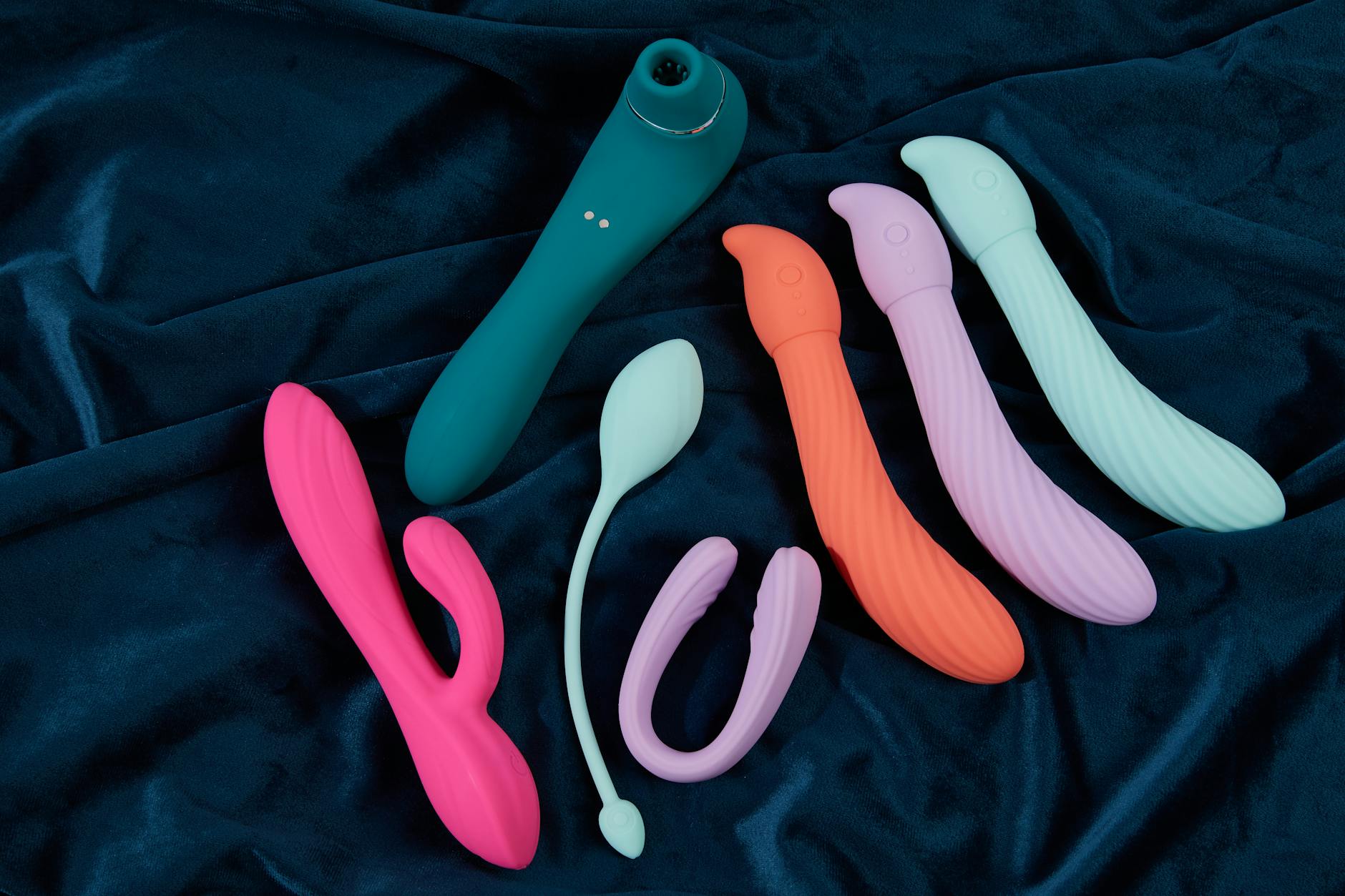
Let's talk about what "sensitive" actually means
Sensitive clits aren't broken. They're not a problem waiting to be solved. But they do respond differently to touch, and that matters because most vibrators on the market are designed without that in mind.
When your clit feels overstimulated by direct vibration, tingles weirdly, goes numb after 30 seconds, or needs you to hold it at a painful angle to feel anything, you're not alone. About 40 percent of people with vulvas report some form of clitoral sensitivity that makes traditional vibrators feel wrong, too intense, or somehow disappointing.
Here's the thing: the problem usually isn't your body. It's the tool.
Why regular vibrators can overstimulate sensitive tissue
Most clitoral vibrators work through direct mechanical vibration. A motor inside the toy oscillates side to side, up and down, or in circles at anywhere from 5,000 to 12,000 cycles per minute. That's a lot of stimulation hitting a small area of extremely sensitive nerve endings.
Your clitoris has roughly 8,000 nerve endings in the glans alone. They're packed densely, which is why pleasure feels so intense. But density also means they're easily overwhelmed. When the same spot gets hammered with vibration at that frequency, the nerve endings can basically check out. They stop firing signals, and you feel numbing, deadness, or an inability to reach orgasm.
Add pressure on top of that vibration (which is what happens when you grip a traditional vibrator tightly to stabilize it), and sensitive tissue gets irritated quickly. The skin thins. The nerve endings fatigue. Pleasure flatlines.
How air-pulse suction changes the game
Lemon clitoral vibrators, including lemon suction toys and air-pulse devices, work on a completely different principle.
Instead of vibrating directly against tissue, they create a sealed chamber around the clitoris and pulse the air pressure inside it. The sensation is more like a gentle kiss than a jackhammer. The pressure stimulates the entire clitoral complex, not just the visible glans.
This matters because the clitoris is way bigger than you see. The part you can touch is only the tip. The internal arms extend up to 4 inches inside the body. When you use air-pulse suction, you're engaging that entire network of nerves at once, which is why users often report fuller, deeper orgasms even at lower intensity settings.
For sensitive clits specifically, the benefits are significant. Air-pulse stimulation doesn't create the same nerve-ending fatigue that direct vibration does. You can use a lemon vibrator for longer without numbing. You don't need to apply pressure to feel sensation, which means less friction and irritation. And because the stimulation pattern is pulsing air rather than mechanical oscillation, your nervous system doesn't habituate to it as quickly.
The research backs this up
Studies on clitoral stimulation devices have consistently found that people report more consistent, easier orgasms with suction-based toys than with traditional vibrators, especially those with sensitive tissue. A 2020 survey of over 700 users found that 68 percent of people who switched from vibrators to air-pulse toys reported stronger orgasms and less fatigue during use.
The neurological reason is straightforward: air-pulse stimulation activates a broader area of nerve endings at lower intensity. You're not overloading a small cluster of nerves. You're pulsing the entire clitoral system gently, repeatedly, and that distributed stimulation is closer to how the body naturally wants to receive pleasure.
Intensity levels matter more than you think
Here's where people with sensitive clits often go wrong: they assume they need to avoid stimulation altogether, or they buy toys that only have one or two weak settings.
The opposite is true. You need a wider range of intensity options, because your sensitivity isn't fixed. It changes with your cycle, your stress level, whether you're warmed up, what you had for breakfast, your medications, your sleep. Some days pattern 1 on the Hello Nancy Lem vibrator is perfect. Other days you need pattern 5 or pattern 7.
Air-pulse toys typically have 10 to 20 different settings, spanning from barely-there pulses to serious intensity. That flexibility lets you start low, warm up gradually, and find the exact sensation your body wants on any given day. Traditional vibrators with just three settings force you to either underwhelm yourself or jump straight to overstimulation.
Start at the lowest setting. Spend 10 to 15 minutes there, even if it feels gentle. Your body will warm up, sensitivity will shift, and you can move up if you want. Many people find their strongest orgasms happen when they stay at medium intensities instead of chasing the highest setting.
The role of lubrication and comfort
Sensitive clits also benefit from reduced friction. This is where lube comes in, and it matters more than most people realize.
Water-based lubrication between your body and the toy creates a smoother interface. It reduces the microfriction that can irritate sensitive skin. It also helps the air-pulse seal work better. When there's a thin, slick layer between the suction cup and your skin, the device creates a better seal, which means more efficient stimulation and less pressure needed from you.
Use a water-based lube if you're using silicone toys. A small amount goes a long way. Reapply if the sensation gets dry or sticky. This simple step can be the difference between sensitivity feeling manageable and feeling like your clit is staging a protest.
Warm-up time changes everything
People with sensitive clits often skip foreplay or move too quickly to toy play. That's understandable if previous stimulation has felt uncomfortable. But rushing is usually what causes the discomfort in the first place.
Your clitoris engorges during arousal. Blood flow increases, tissue plumps slightly, and nerve sensitivity actually increases but in a way that feels good instead of raw. Without that arousal-based engorgement, the tissue is thinner and more vulnerable to overstimulation.
Budget 15 to 20 minutes of foreplay, partnered touch, or mental arousal (fantasy, audio, whatever works for you) before introducing a toy. Let your body warm up. Notice when the sensation shifts from "too much" to "actually nice." That shift is your clitoris telling you it's ready. Starting a toy at that moment, on a low setting, is going to feel completely different than starting at it on high when you're still waking up.
When sensitivity is actually pain
There's a difference between "this feels too intense" and "this actively hurts." If you're experiencing sharp pain, stinging, or burning during or after toy play, that's a signal to stop.
Sensitivity without pain usually improves with the right tool, warmup, lube, and settings. Pain often indicates something else: an infection, irritation from a toy material you're reacting to, underlying tissue condition, or sometimes hormonal changes. If pain is your issue, see a gynecologist before assuming your clit is just "too sensitive."
For typical sensitivity (intensity discomfort, numbing, overstimulation), lemon clitoral vibrators and air-pulse suction are game-changers. For pain, you need medical guidance first.
Building confidence with your body
One last thing I want to say as someone who works with people navigating pleasure and intimacy: sensitivity becomes a feature, not a bug, when you stop fighting it.
Your clit isn't being difficult. It's being honest. It's telling you exactly what kind of touch works for it. That's actually valuable information. Instead of trying to force your body to tolerate vibration patterns it hates, you get to design a pleasure experience that actually fits your wiring.
A lemon vibrator, or any good air-pulse toy, isn't a fix for being sensitive. It's an acknowledgment that sensitivity is real, it matters, and you deserve a tool that honors it. Start low. Go slow. Use lube. Notice what feels good. Your body knows what it needs. The right toy just makes the conversation clearer.
FAQ
Are lemon clitoral vibrators safe for sensitive skin?
Yes, as long as the toy is made from body-safe silicone (which Hello Nancy toys are). The material itself is gentle. Air-pulse stimulation distributes pressure across a wider area than direct vibration, which actually reduces skin irritation. Just use lube, keep intensity moderate, and take breaks if you feel any tenderness. Most people with sensitive skin report fewer irritation issues with suction toys than with traditional vibrators.
How long does it take to adjust to using a lemon vibrator?
Most people feel comfortable within two or three sessions. Your first experience might feel unfamiliar, especially if you're used to traditional vibration. Try it for 10 to 15 minutes at a low setting, then stop. Come back the next day and explore a bit more. By session three, your brain has integrated what this sensation is, and pleasure usually kicks in. Don't rush it. Familiarity builds confidence.
Can I use a lemon suction toy if I have a clitoral hood piercing?
Maybe, but carefully. Piercings can shift the anatomy slightly and sometimes change how suction seats. Try it on the lowest setting first to see how it feels. If there's any sharp pain or the jewelry moves uncomfortably, stop. You might need to use a traditional vibrator instead, or explore manual stimulation combined with the toy in a way that avoids pressure on the pierced area.
Why does my sensitive clit go numb after using a vibrator?
Nerve ending fatigue from direct mechanical vibration. Your nerves fire repeatedly at the same frequency until they stop responding. This is called habituation. Air-pulse toys create a pulsing pattern that's less likely to trigger habituation because the pattern naturally varies. Also, reducing intensity, taking breaks, and varying patterns help. If numbness is severe or lasting more than a few hours after use, back off intensity and give your body more recovery time.
Is it normal for sensitivity to change throughout my cycle?
Completely normal. Hormone levels shift your clitoral sensitivity dramatically. Around ovulation, many people feel more resilient to direct stimulation. During the luteal phase or before your period, sensitivity often increases. This isn't a problem. It just means you might need different tools or settings at different times. A lemon vibrator with multiple intensity options lets you adapt to those changes without buying new toys.
How do I know if I'm using a lemon clitoral vibrator correctly?
You should feel suction and pulsing, not pain, numbness, or discomfort. The device should create a light seal around your clitoris. If it's slipping or not creating any sensation, adjust the angle or add a tiny bit of lube. If you feel numb after 10 minutes, drop the intensity and try again next time. The sweet spot is when you feel pleasure building gradually, without any sensation of rawness or overstimulation. If that takes a few tries to find, that's normal.
Why your next toy matters
If sensitivity has kept you from enjoying vibrators, a lemon clitoral vibrator or any quality air-pulse toy is worth trying. The sensation is genuinely different. You're not just getting a lower-powered traditional vibrator. You're getting a tool designed for a different kind of stimulation entirely.
Take your time exploring it. Use lube. Start low. Warm up first. And remember: your sensitivity isn't a flaw in you. It's just information about how your body likes to be touched. The right tool makes that information accessible instead of frustrating.
If you have questions about finding the right toy for you, our team is here to help. Reach out anytime at /contact.