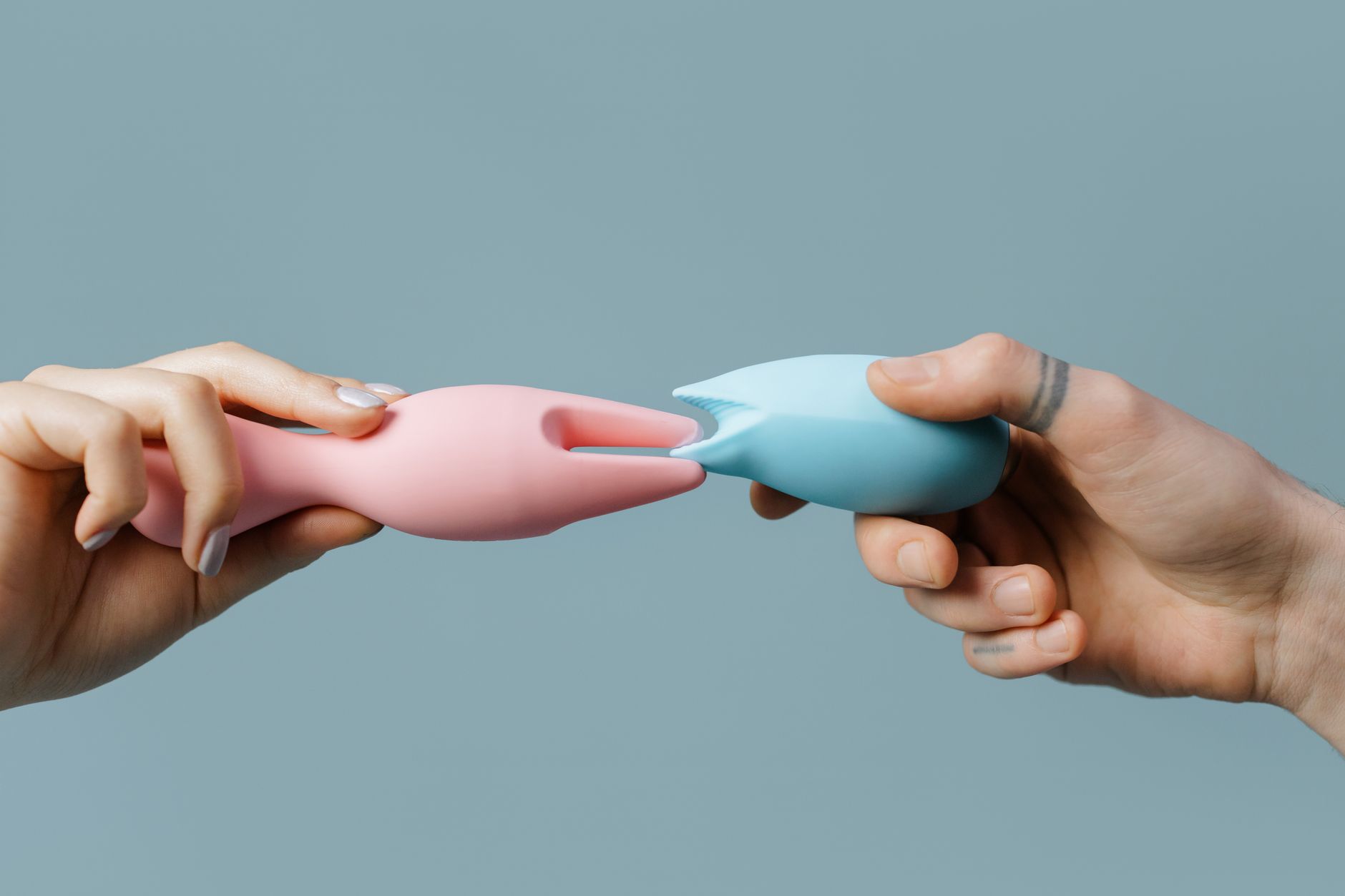
Here's what actually happens when you're rushing
Your body tightens. Your breath gets shallow. Your mind splits in two. One part is trying to feel something, and the other part is watching, judging, waiting for the finish line. That second voice is the problem.
Performance anxiety around orgasm is wildly common. It shows up for lots of reasons: a partner who's waiting, a sense that you "should" be done by now, months or years of feeling like your body doesn't work the way it's supposed to. The irony is brutal. The faster you try to get there, the less likely you are to arrive.
Luckily, this is fixable. And lemon vibrators, specifically, can be your ticket back to pleasure without the pressure.
Why performance anxiety kills the sensation
When your nervous system is in "performance mode," you're in fight-flight territory. Your brain deprioritizes sensation and pleasure signals in favor of threat detection. It's designed to keep you safe, not to feel good. Blood flow pools in your legs and chest instead of concentrating where you need it. Your pelvic floor tightens defensively instead of relaxing into arousal.
That's not a character flaw. That's basic neurology.
What makes it worse is that the anxiety becomes self-reinforcing. You tense up, so sensation drops. You notice sensation dropping, which triggers more anxiety. The cycle accelerates. Many people I work with describe it as feeling numb, even when they're highly aroused mentally.
The good news: this is one of the most reversible patterns I see clinically. You don't need to fix your body or your mind. You need to change the conditions.
How lemon vibrators interrupt the performance loop
Lem vibrators work through suction and pulsation. Unlike traditional vibrators, which rely on direct friction, the Lem creates a gentle, rhythmic sensation that doesn't require you to "perform" anything. There's nothing for your brain to evaluate or rush toward. The experience is happening to you, not through you.
This is the key shift.
When sensation arrives through an external device on its own rhythm, your nervous system doesn't have the same opportunity to hijack the experience. You're not responsible for making it happen. You're just noticing what's already there.
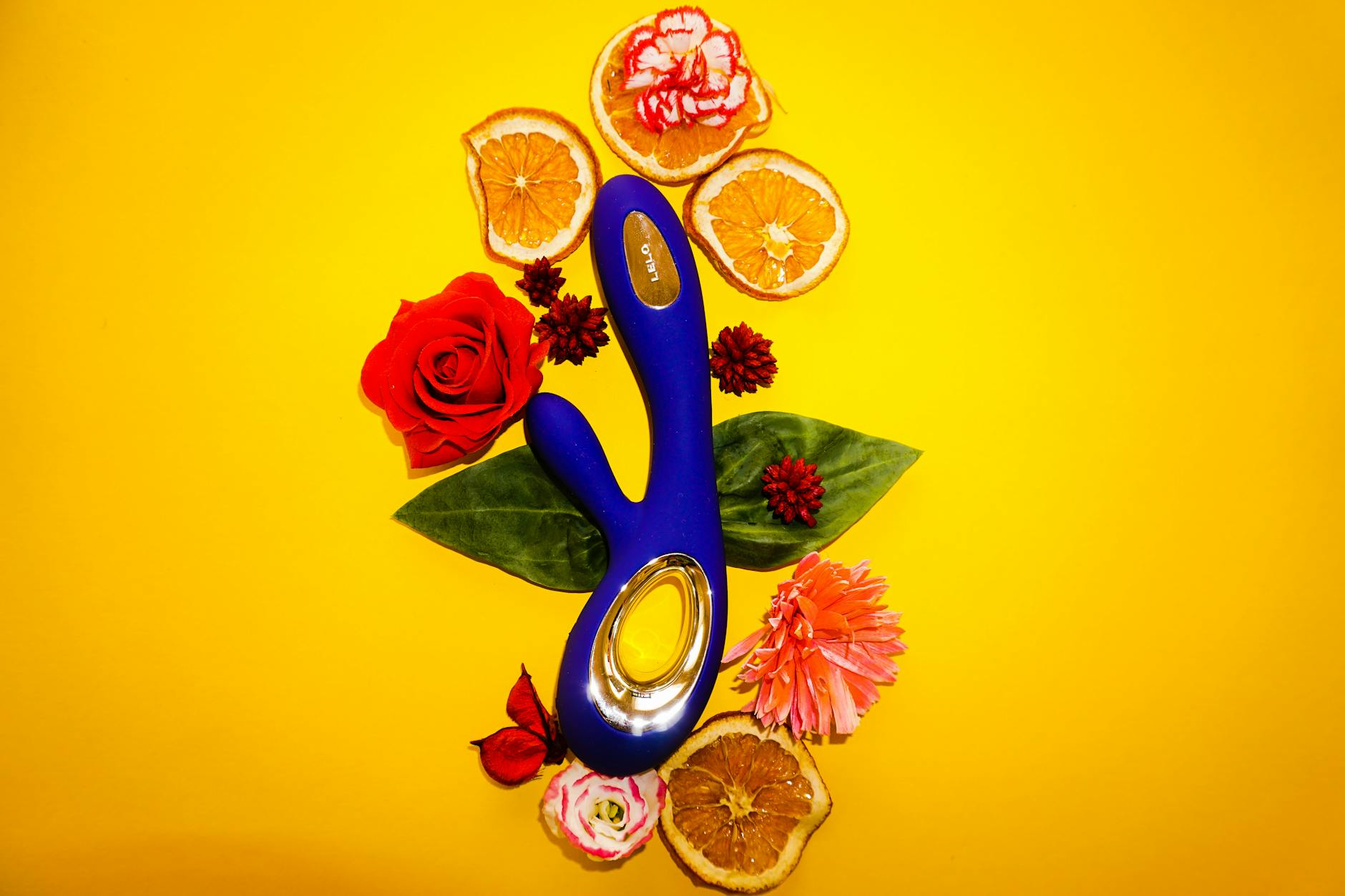
Photo by FounderTips . on Pexels
Many of my clients tell me their first breakthrough moment with a suction-based toy like the Lem came when they stopped trying to use it "correctly" and just let it run. The goal wasn't to reach climax in a certain timeframe. The goal was just to feel something new without judgment.
The pressure-free setup
If you're carrying orgasm anxiety, here's what I recommend:
Block out real time. Not "squeeze this in," but actual time. Thirty minutes minimum, ideally an hour. The pressure lifts when you know no one's waiting and there's nowhere to be.
Tell your partner (if applicable) that you need to take the outcome off the table. If you're with someone, the single most useful thing they can do is genuinely not need you to finish. That might sound simple. It's not. But it matters profoundly. If they're watching or waiting or hoping, your nervous system knows. Communication here prevents a lot of friction.
Start with the Lem on a lower pulse setting. Not because it's safer, but because it removes one layer of intensity you have to manage. Pattern 1 or 2 is where I usually start with clients who have performance anxiety. The goal is to feel sustained pleasure, not to chase speed.
Don't aim for orgasm. This is counterintuitive but critical. Set your intention as "I'm going to notice what I feel for the next 20 minutes without trying to reach anywhere." That's it. Orgasm, if it happens, becomes a side effect instead of the job.
What to do with your mind during this
Your thoughts will probably wander back to performance metrics. That's normal. You're not failing at relaxation. You're noticing your habit.
When the "Am I taking too long?" thought shows up, try this: acknowledge it as a thought, not a fact, and redirect. Not by fighting it, but by bringing your attention back to physical sensation. What does the suction feel like right now? Is it stronger on the left or right? What happens when you breathe slowly instead of holding your breath?
Anxiety loves a vacuum. Fill it with curiosity instead of judgment.
If you find yourself stuck in your head for 15 minutes straight, it's fine to pause, reset, maybe take a breath. But resist the urge to problem-solve ("Why isn't this working?"). Your job is just to stay present with the experience, not to make it happen faster.
How longer, slower sessions rewire your nervous system
One session won't undo years of performance anxiety. But consistent, pressure-free pleasure sessions do something powerful: they teach your nervous system that good feelings are safe and achievable without strain.
Over time, your body learns to relax into arousal. Blood flow returns to the right places. Your pelvic floor softens. The orgasm, when it arrives, comes from a place of ease instead of effort.
I recommend starting with once or twice a week of this kind of session, ideally 20-40 minutes. Some of my clients see shifts within 2-3 weeks. Others need more time. The timeline is less important than consistency. You're retraining a nervous system pattern, and that takes repetition.
The partner conversation
If you share pleasure with a partner, this is worth discussing directly. Not as "I have a problem," but as "I want to explore something different, and I need your support in a specific way."
That way looks like:
- Removing the expectation that you'll finish in a certain timeframe
- Them being present but not performance-focused (touching you, being close, without watching for results)
- Clear communication beforehand about what you need (silence, reassurance, space, whatever that is)
- Celebrating the experience as it is, not against a checklist
Many couples find that when the pressure lifts, the quality of connection actually deepens. You're not performing for them. You're exploring together. That shift alone can unlock things.
When to consider working with someone
If performance anxiety around orgasm has been present for months or years, or if it's paired with other symptoms (low desire overall, pain during sex, numbness), talking to a sex therapist or relationship coach is genuinely worth it. This isn't about being broken. It's about having expert support to untangle what your nervous system learned and help it learn something new.
A good therapist won't tell you to "just relax." They'll help you understand where the anxiety came from and give you concrete tools to move through it.
The real shift
Lem vibrators aren't magic. But they do something practical: they let you experience pleasure without the performance meter running. They create space for your nervous system to settle. And in that space, real sensation becomes possible again.
Your body isn't the problem. The conditions you've been working under are. Change the conditions, and everything else gets easier.
People also ask
How long does it typically take to overcome orgasm performance anxiety with a lemon vibrator?
Most people see some shift within 2-3 weeks of consistent, pressure-free sessions (once or twice weekly, 20-40 minutes each). Deeper rewiring usually takes 2-3 months. The timeline depends on how long the anxiety has been present and how consistent you are with the new approach. Think of it like retraining a habit. Your nervous system needs repetition to believe that pleasure is safe and achievable without performance.
Can performance anxiety around orgasm affect desire overall?
Absolutely. When your body learns that pleasure sessions are stressful, your brain starts avoiding them entirely. You might notice lower desire weeks or months into performance anxiety. This is a protection mechanism, not a sign that something's wrong with you. As the anxiety resolves and sessions become genuinely pleasurable, desire typically rebounds.
Is it normal to feel numb or disconnected when using a lemon vibrator if I have performance pressure?
Yes, very. When you're in fight-flight mode, sensation gets deprioritized by your nervous system. That numbness isn't a failure. It's a signal that your nervous system is still in performance mode. The solution is to extend the time before intensity, lower the pattern setting, and focus on the curiosity exercise (noticing small sensations) rather than chasing big feelings. Numbness usually resolves once the pressure lifts.
Should I tell my partner about using a lemon vibrator to work through performance anxiety?
That depends on your relationship and comfort level. If you're in a partnership and you want to maintain sexual connection, I recommend it. Not as confession, but as information. "I've been feeling pressure around orgasm, and I want to explore some new approaches. Here's what that might look like for us." Partners who understand what you're working on can be your biggest ally. If you're not ready to share, that's also valid, and working through this solo is completely possible.
What if I feel pressure even when I'm alone with my lemon vibrator?
That pressure is coming from internalized expectations, not external ones. It's worth pausing and asking: where did I learn that I should finish in a certain way or timeframe? Whose voice am I hearing? Often, it's a partner from the past, a parent's message about efficiency, or cultural messaging about what sex should look like. Naming that voice helps. Then you can consciously choose a different intention for this session. "I'm here to feel good without a deadline," not "I need to make this work." Journaling about this before a session sometimes helps clarify what you're actually believing.
Can I use a clitoral vibrator like the Lem if I have performance anxiety, or will it make the pressure worse?
Yes, absolutely. The Lem specifically is designed for sustained, pattern-based pleasure rather than intensity escalation. The key is how you use it. Set a clear boundary beforehand: "I'm not aiming for climax. I'm here for 30 minutes of sensation exploration." That frame makes all the difference. The suction-based design of the Lem also makes it easier to stay present with gentle, consistent feeling rather than chasing bigger and bigger intensity, which is often what drives performance anxiety.
If you're ready to explore pleasure without the pressure, reach out. A conversation with someone who understands your experience can be the first step toward reclaiming what feels good.