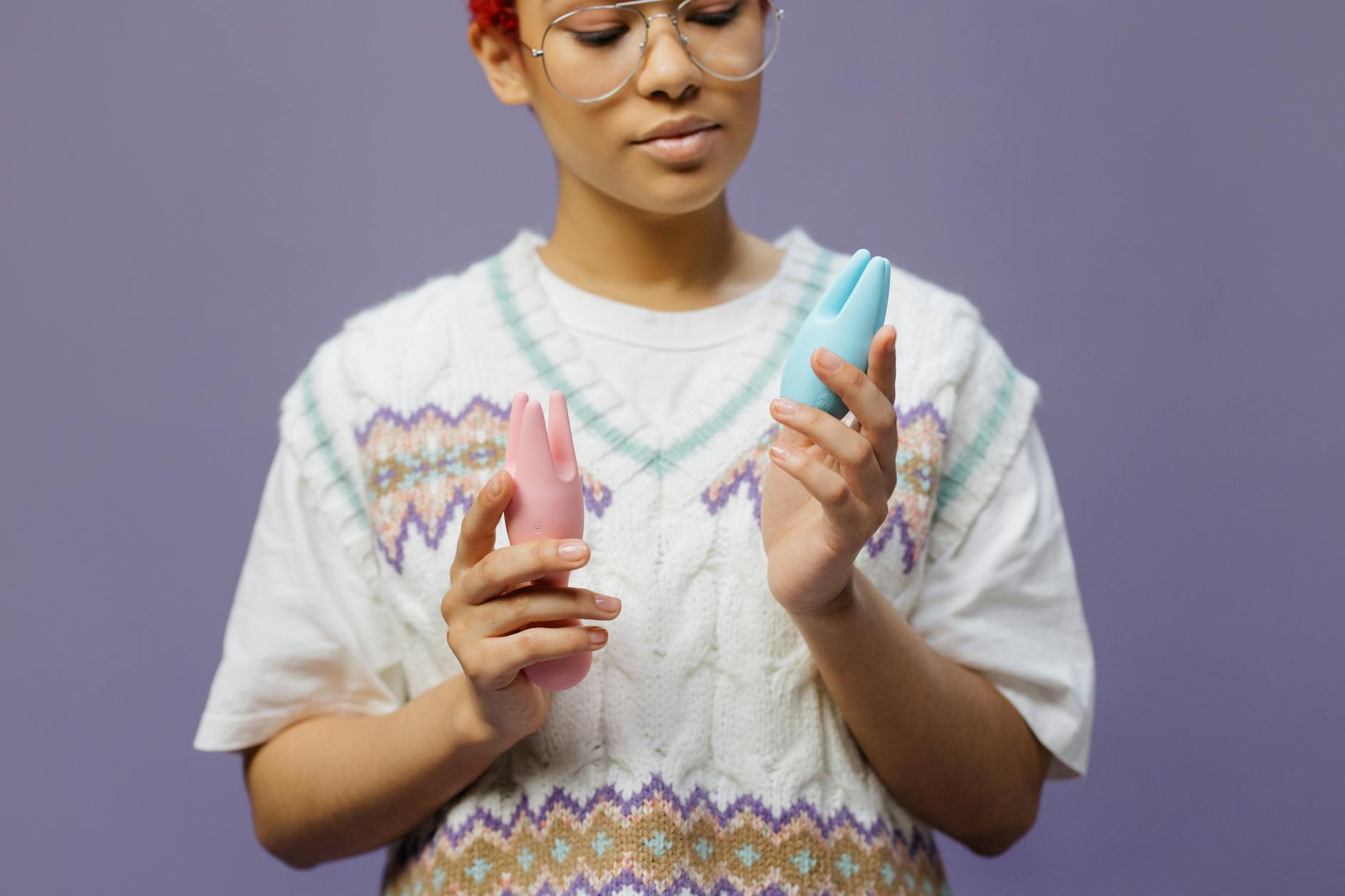
Your body is rewiring itself right now
Starting hormone replacement therapy changes how your nervous system responds to stimulation. Not eventually. Right now. Within days, you'll notice your arousal pattern shifting. Some people feel heightened sensitivity. Others experience a lag where excitement used to build faster. Both are completely normal, and both are temporary.
Here's what I want you to know before you panic or assume your body is broken: this is just your system recalibrating to new hormonal input. You haven't lost the ability to feel pleasure. You're learning a different pattern.
What actually changes in the first 2-4 weeks
Estrogen and testosterone begin rebuilding your tissue thickness almost immediately. The clitoral tissue gets more blood flow. Your pelvic floor muscles start reabsorbing water. Sensitivity can swing both directions depending on your baseline and your HRT regimen.
Here's the timeline most people experience:
Days 1-7: Hypersensitivity is common. Light touch that usually feels good might feel too intense. Some people describe it as almost electrical.
Week 2-3: The sensitivity normalizes but arousal might build slower than you're used to. Your brain is adjusting to shifting cortisol and dopamine levels alongside the estrogen.
Week 4+: Most people report increased genital sensation, faster arousal, and stronger orgasms. But this varies wildly depending on your age, baseline hormones, and which HRT protocol you're on.
The reason this matters for your lemon vibrator routine is that air-suction clitoral toys are sensitive to these shifts. They work by stimulating nerves rather than through direct vibration, which means the sensation profile changes as your tissue responds to hormones.
How your lemon vibrator feels different right now
You might notice that settings you loved before suddenly feel too strong. Or the opposite. The intensity hasn't changed, but the tissue receiving it has.
This is especially true for suction toys like the Lemon clitoral vibrator. The seal depends on tissue firmness and blood flow. As those shift, the sensation changes. It's not a problem. It's just a recalibration.
Three things you'll likely notice:
The seal feels stronger. Hormone therapy plumps up your vulvar tissue. You might need to adjust where you position the cup, or find that lower intensity settings now feel optimal where you used to need higher.
Arousal takes longer to peak. This is temporary. Your body is processing new hormonal signals. Budget 15-20 minutes of warm-up time instead of your usual routine. This isn't a sign of dysfunction. It's just how early HRT rewiring works.
Orgasm might feel different in texture. Some people report more diffuse pleasure instead of sharp peaks. Others experience the opposite. You're not imagining it. Hormone changes genuinely shift how your nervous system processes sensation.
How to adjust your technique during this transition
Four things I recommend to everyone starting HRT:
Start on the lowest setting and work your way up. If you normally use pattern 3 or 4 on your lemon vibrator, begin at 1 or 2. Your heightened sensitivity will normalize, and you don't want to overwhelm your system during the recalibration period.
Extend your warm-up time. Arousal is slower right now, and that's okay. Spend time building anticipation with your hands or a partner before you introduce the lemon toy. This trains your nervous system to recognize the new arousal signature.
Experiment with positioning. The ideal cup placement might shift as your tissue firms up. Don't assume your usual angle is still the sweet spot. Spend a week trying slightly different positions to find where the sensation feels best now.
Use water-based lubricant even if you don't think you need it. HRT usually improves natural lubrication within 4-6 weeks, but the first few weeks can be unpredictable. A small amount of lube ensures consistent stimulation and takes pressure off your body to perform.
What's happening in your body right now
Hormone replacement therapy doesn't just change your genitals. It's rewiring your entire sexual response cycle. Your hypothalamus and pituitary gland are getting feedback they haven't received in years. Your dopamine and serotonin pathways are recalibrating. Your autonomic nervous system is learning to process arousal signals with new hormonal backdrop.
This is why your orgasm might feel different. It's why you might feel aroused at random moments. It's why some sensations that used to work feel mediocre now.
You haven't lost sensitivity. You're developing a different kind.
If you had previously struggled with low libido or difficulty reaching orgasm, HRT often reverses that within 6-12 weeks. The pleasure you're building now is often richer than what came before. But in these early weeks, patience matters more than intensity.
The first month is the adjustment phase
Think of it like learning a new musical instrument. You know music. Your hands know how to move. But this particular instrument requires a different touch. That doesn't mean you've lost the ability to play. It means you're learning its specific language.
Your lemon vibrator hasn't changed. Your body has. And your body is getting better. Give it time.
If after 6 weeks the changes aren't stabilizing, or if you're experiencing pain rather than sensation shifts, that's worth flagging with your prescriber. But in the first month? Sensitivity swings and arousal timeline changes are standard. Your system is doing exactly what it should.
FAQ
Will HRT permanently change how my lemon vibrator feels?
No. After 8-12 weeks, your body stabilizes on whatever HRT dose you're taking. Your lemon vibrator will feel consistent again. What often changes permanently is that arousal is faster and stronger than it was before HRT, which many people experience as a positive shift.
Is it normal to feel hypersensitive for the first few days?
Completely. Your nerve endings are getting flooded with new hormonal signals. It usually passes within a week. Lower your lemon vibrator intensity during this window.
Should I use my lemon vibrator at all during the adjustment period?
Yes, but gently. Using it helps your nervous system learn your new arousal pattern. Just start with lower settings and longer warm-up time. There's no benefit to avoiding it.
What if I feel less sensitive after starting HRT?
That's less common but does happen. It usually resolves within 3-4 weeks as your tissues adjust. If reduced sensitivity persists past 8 weeks, mention it to your prescriber. Sometimes a dose adjustment helps.
Can I use my lemon vibrator the same way I did before HRT?
You can, but you probably won't want to once you adjust. Most people find they need different intensity, timing, and positioning during the first month. After stabilization, you might land on a new routine that works even better.
Does HRT affect orgasm intensity with a lemon vibrator?
Usually yes, in a positive direction. Most people report stronger, faster orgasms within 6-12 weeks. But the first month is a transition. Be patient with the process.
You're not broken, you're recalibrating
Hormone therapy is one of the most profound body shifts an adult can experience. Your sexual response doesn't escape that transformation. The fact that you're noticing changes means you're paying attention. That's actually ideal.
Your lemon vibrator is still the same tool. Your body is just learning to speak a new language with it. Give yourself permission to experiment, adjust, and move slowly through this transition.
If something feels off or painful beyond the first week, reach out to your healthcare provider. But sensitivity shifts, arousal timeline changes, and orgasm texture variations during the first month of HRT? That's your nervous system working exactly as it should.
Your pleasure matters. And it's about to get a lot more accessible.