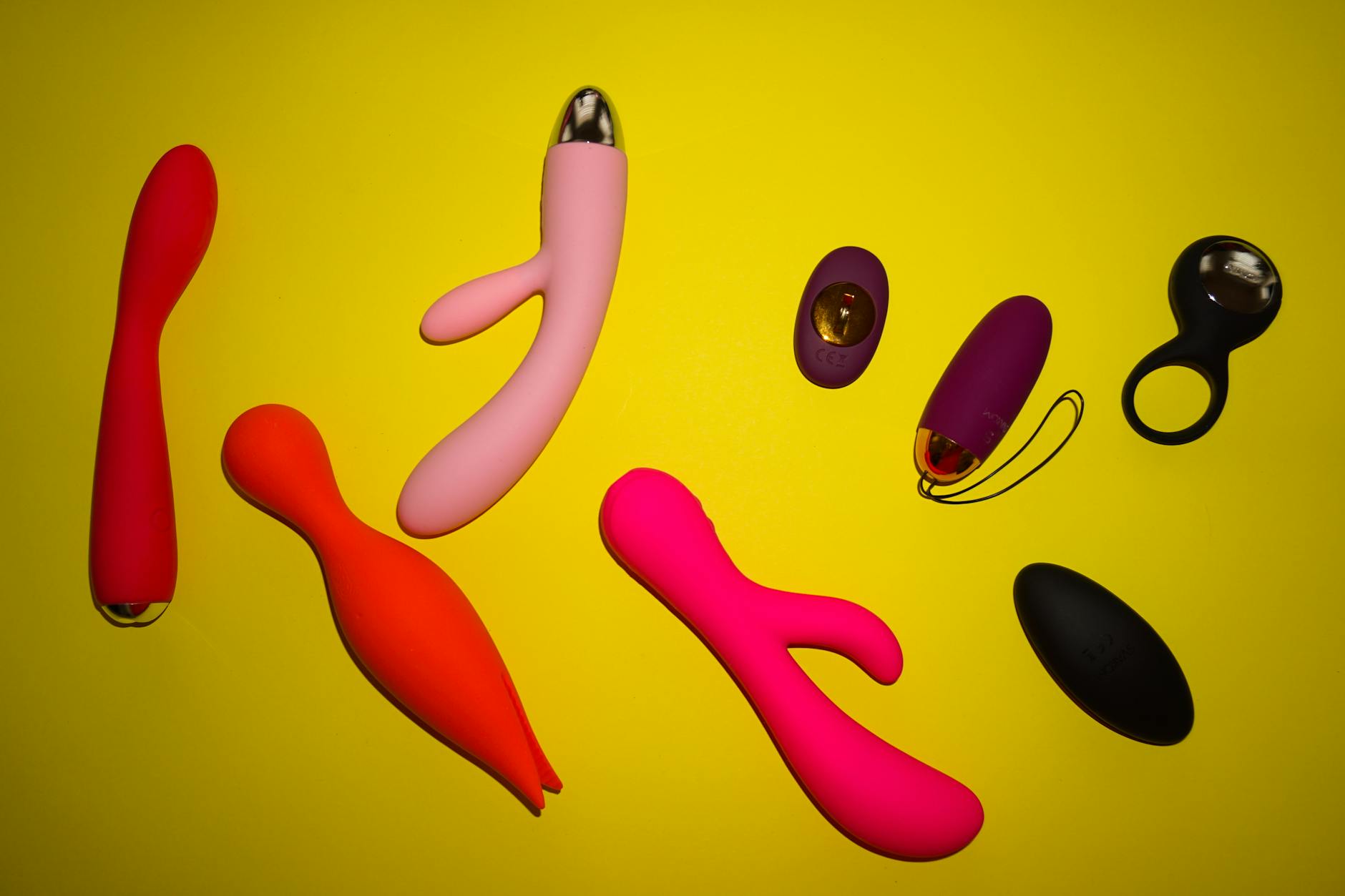
Let's talk about timing
Honestly, the best time to introduce a lemon vibrator into a new relationship is sooner rather than later. Not on the first date, obviously. But within the first few months, when you're still building the sexual foundation together, bringing pleasure toys into the mix signals something important: you care about mutual satisfaction, you're not embarrassed about what feels good, and you're willing to be vulnerable about your needs.
That foundation matters more than most people realize. When you skip this conversation early, it gets exponentially harder to introduce later. You risk the other person reading it as a criticism, a sign that something's missing, or even that you're not interested in them specifically. Introduce it early and it becomes just another piece of how you two connect.
The conversation before anything happens
Don't ambush the moment. Have this chat somewhere neutral. Not in bed, not when you're about to have sex, not after a drink or two. The living room on a regular Tuesday works fine.
Here's the shape of it: "I've been thinking about something I'd like to explore with you. I really enjoy my own pleasure, and I find clitoral vibrators help me relax into sensation. I'd love to try using one together, but only if that sounds good to you. How do you feel about that?"
Notice what's in there: you own your own pleasure (not blaming them), you normalize vibrators as a personal tool (not a judgment on their performance), and you explicitly ask for consent. Notice what's not there: no apologies, no hedging, no "if that's not weird for you." You're stating a preference, not begging permission.
Their response tells you a lot. Enthusiasm is great. Hesitation is normal and worth exploring. "I'm not sure how I feel" deserves a follow-up question: "What part makes you uncertain?" Often it's one of three things: they think it means they're not enough, they've never seen one before, or they worry about their own performance. All of those are addressable.
Why lemon vibrators work so well for partnered exploration
Lemon clitoral vibrators like the Lem are designed for external stimulation, which means there's no penetration component. That creates space for your partner to stay present and involved. They can see what's happening, touch you, talk to you, and adjust their own stimulation without interference.
The suction-based technology on devices like this feels fundamentally different from friction vibration. It works through gentle pressure and pulse rather than buzzing, which means the sensation stays localized and controllable. Your partner isn't watching you white-knuckle through overstimulation. You look relaxed, connected, present. That's what they'll remember.
The other thing: lemon vibrators are small enough to hold in one hand, and shaped in ways that don't block the view or the access your partner has to you. If they want to touch you, they can. If they want to kiss you while you're using it, that's possible. The tool augments what's already happening between you, rather than replacing their role.
The first time you use it together
Take off the pressure around performance. This isn't about achieving anything specific. The goal is just to see how it feels in a partnered context, when you're relaxed and curious rather than alone.
Start with a conversation about what you like. "When I use this alone, I usually start on pattern one for about five minutes before switching to pattern three." Give them the roadmap. Explain that you might take a while to build up to orgasm, or you might not come at all, and that both are fine. You're not performing. You're exploring.
Then take your time. Use the vibrator the way you normally would. Let them watch. Most partners find this surprisingly hot. Not because of the toy, but because they're seeing you in genuine pleasure, seeing your body respond honestly, without any filter or performance pressure.
If they want to join in, they can touch you elsewhere. Your thighs, your breasts, your neck, your mouth. The vibrator gives them permission to contribute something that's not about penetration or friction. They become part of the moment rather than the central focus.
The conversation about what you both want
Afterward, talk about it. "That felt really good. Did you enjoy that?" Listen to what they say. If they seemed nervous, ask why. If they seemed into it, ask what specifically worked for them. This is how you build a language around pleasure that includes both of you.
Some partners worry they'll be replaced. Address that directly: "I like this because it frees us up to focus on connection instead of performance. You're still here. This just adds something." Some partners worry about their own pleasure being forgotten. That's real. The promise is that tomorrow, or next time, the focus shifts back to them.
Some partners want to use the lemon vibrator on you. That's a conversation too. Some people love the idea. Others find it uncomfortable to take that control. Neither is wrong. You get to set boundaries. Your pleasure is yours to navigate.
Integrating it into regular intimacy
The first time is the novelty moment. After that, it becomes a regular tool in your sexual vocabulary. Some couples use it every time. Some use it occasionally. Some discover that the partner wants their own.
The smoothest integration is when the vibrator becomes available but not required. You're having sex, things are building, and someone reaches over and turns it on. Or you're in the middle of partnered pleasure and you decide to use it. It's casual, not ceremonial.
That casualness only works if you've done the groundwork upfront. Which brings us back to: talk about it first.
When your partner wants to use a lemon vibrator on their own pleasure
If your partner mentions wanting to explore vibrators themselves, treat that the same way you'd want them to treat your pleasure tool. With curiosity, not jealousy. With genuine interest in how they feel, not defensiveness about your role.
Many couples find that when you're integrating clitoral vibrators into partnered sex, the focus shifts from "my pleasure" or "their pleasure" to "our pleasure." That's when things get really interesting.
Building trust through vulnerability
Here's what I know as a therapist: couples who can talk about pleasure early, who can show each other what feels good without shame, who can use tools and explore without it becoming loaded with meaning. They build trust faster. They communicate better about other things too.
Introducing a lemon vibrator early in a relationship isn't actually about the vibrator. It's about saying: "I trust you with this part of me. I'm willing to be vulnerable about what my body needs. I want us to figure this out together."
That's the foundation that makes everything else possible.
People also ask
Will my partner feel inadequate if I use a vibrator?
Not if you frame it correctly from the start. The key is separating "my body needs this type of stimulation" from "you're not enough." Clitoral vibrators work through technology and design. A penis or fingers can't replicate that pressure pattern, and that's not a reflection on your partner's ability or attractiveness. Most partners actually feel relief when they understand that their role isn't to be a one-person pleasure machine. They get to enjoy you without performance pressure.
How soon is too soon to introduce a vibrator in a new relationship?
Think weeks, not months. Once you've been intimate a handful of times and you're comfortable being naked and honest together, that's the window. Earlier than that and it can feel like you're planning the relationship. Later than that and it becomes a bigger deal than it needs to be. The conversation should happen before the first time you actually use it together.
What if my partner says no?
Respect that. You can ask why, and listen genuinely. Maybe they need more time. Maybe they have past experiences that make them uncomfortable. Maybe they think vibrators are only for solo pleasure. That's information. You don't have to change your mind about your own pleasure, but you do have to decide if this is something you can live with. Sometimes the answer is yes. Sometimes it's no. Both are valid.
Can we use a lemon vibrator if one of us hasn't had much sexual experience?
Absolutely. In fact, it might make things easier. If one partner is newer to sex, a vibrator removes some of the pressure around "doing it right." The focus becomes sensation and exploration rather than performance. That's useful regardless of experience level.
Is it weird to use a vibrator during partnered sex?
No. It's increasingly common, and once you get over the initial weirdness factor, it becomes a normal part of how couples create pleasure together. The weirdness usually comes from the fear of judgment, not from the actual experience.
What if using a lemon vibrator together doesn't feel good?
Then you try something else. Or you don't. Some couples love them. Some couples find that other things work better for them. The point isn't to force it. The point is to have explored it without shame, learned something about each other, and moved forward based on what actually feels good to you both.