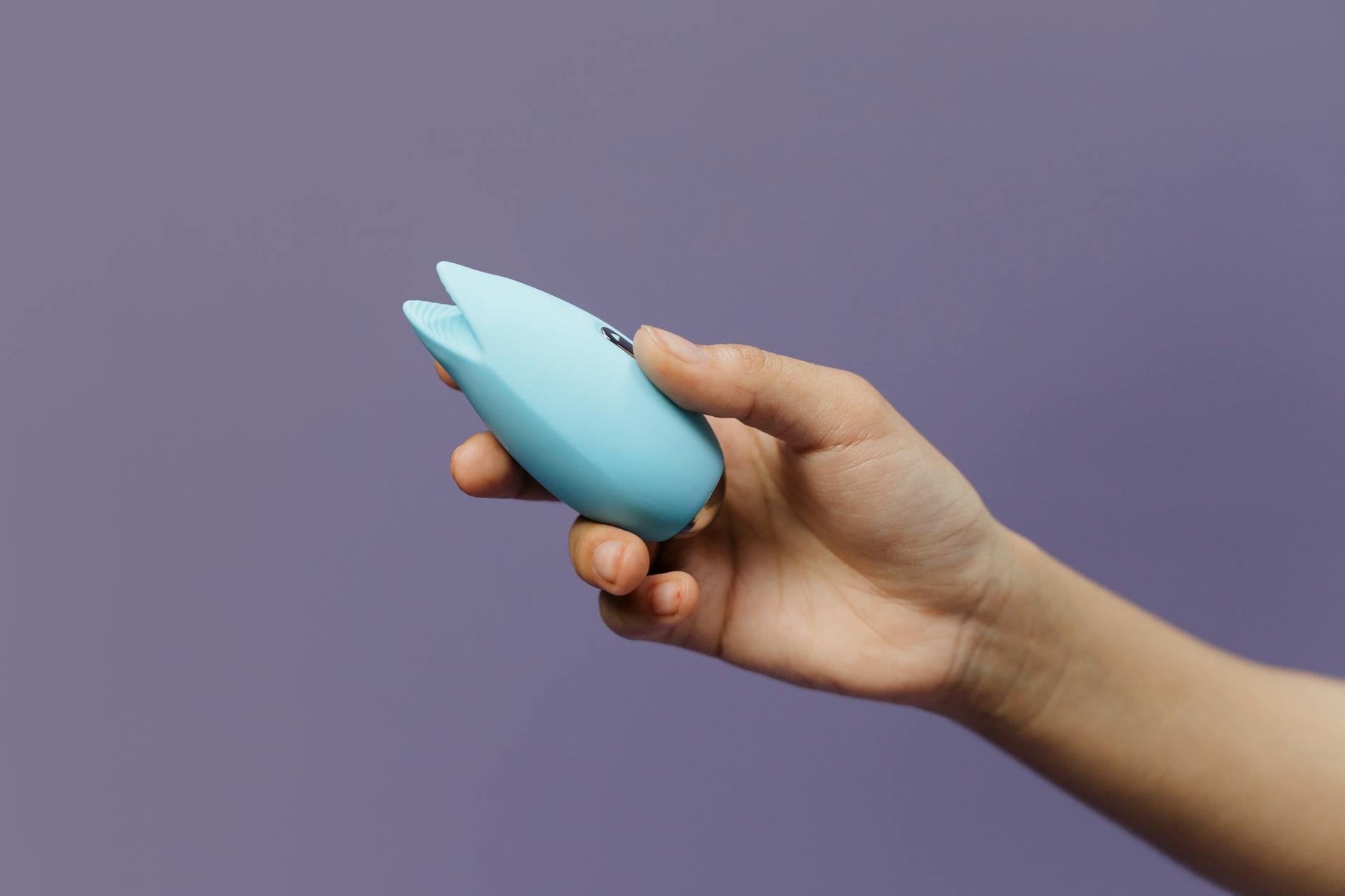
Let's be real about anxiety and sex
Anxiety doesn't just make you feel worried. It hijacks your nervous system, telling your body that now is not the time to relax, feel pleasure, or be vulnerable. Your amygdala is screaming danger while you're trying to have an orgasm. That's not a personal failure. That's neurobiology working against you.
Here's what actually happens: when anxiety spikes, your parasympathetic nervous system (the one responsible for arousal and pleasure) gets sidelined. Blood flow redirects away from your genitals. Your pelvic floor tightens. Your brain becomes hypervigilant instead of present. Desire doesn't vanish because you're broken. It vanishes because your body is in survival mode.
The good news is this is reversible. And clitoral vibrators like the Lem can be part of rewiring that response.
Why anxiety kills arousal first
Your nervous system has two main operating modes: sympathetic (fight-or-flight) and parasympathetic (rest-and-digest). Arousal lives in the parasympathetic state. Anxiety triggers sympathetic activation, which literally cannot coexist with deep relaxation or pleasure.
When you're anxious about sex itself (performance anxiety, body image, fear of being judged), you get a cruel loop: the anxiety kills arousal, which makes you more anxious about not being able to get aroused. One panic feeds the next.
This is especially common in people rebuilding intimacy after trauma, managing generalized anxiety disorder, or navigating new relationships where stakes feel high. Your nervous system doesn't know the difference between real danger and social embarrassment. It treats them the same way.
What makes clitoral vibrators particularly helpful here is their ability to override the thinking brain. When external stimulation is strong and focused enough, your body can achieve arousal even when your conscious mind is still tangled up in worry.
The neuroscience of focused stimulation
Clitoral vibrators work on a principle called sensory gating. When you apply sustained, rhythmic stimulation to an erogenous zone, your nervous system gradually stops treating that sensation as a threat and starts recognizing it as pleasure. This isn't magic. It's your sensory cortex learning.
The Lem and similar suction vibrators are particularly effective because they create a specific type of stimulation that demands attention without requiring penetration (which can trigger more anxiety). The sensation is bilateral, meaning it affects your whole pelvic region, not just one hypersensitive point. This distributes sensation in a way that calms rather than overwhelms.
Over time, repeated positive sensory experiences in a relaxed context literally rewires your threat response. You're training your nervous system to associate genital touch with safety, not danger.
Starting small when your nervous system is dysregulated
If anxiety is actively blocking arousal, jumping straight to a vibrator won't work. Your body won't cooperate if it's still in fight-or-flight mode.
Start here:
Step one: ground yourself first. Before any sexual activity, spend five to ten minutes on nervous system regulation. This might be deep breathing (exhale longer than you inhale), progressive muscle relaxation, a warm bath, or just sitting quietly. The goal is to get your heart rate down and your parasympathetic system back online.
Step two: use vibration as a grounding tool, not a goal. Hold your Lem at a low setting (pattern 1 or 2) against your inner thigh, your labia, or your pubic mound. Not for orgasm. Just for sensation. Let your body remember what arousal feels like without the pressure to perform.
Step three: notice what happens. Does your jaw relax? Do your shoulders drop? Is your breathing becoming slower? These are signs that your nervous system is shifting. Stay here as long as it feels good. Five minutes, thirty minutes, whatever.
The repetition matters more than the intensity. Anxiety needs consistency to retrain.
Building a ritual that works against anxiety
Anxiety hates uncertainty. It loves predictability. One of the most underrated uses of a clitoral vibrator when anxiety is high is creating a reliable, calming ritual around pleasure.
Here's what that might look like:
Same time of day (evening, right before bed). Same location (somewhere private and warm). Same warm-up (bath, stretching, tea). Then the same vibrator, same low settings, same breathing pattern.
Your nervous system begins to recognize: this is safe time. This is when I practice feeling good. This is not when I have to perform or prove anything.
Many of my clients find that this ritual, repeated three to four times a week for six weeks, shifts their entire relationship with pleasure. Not because the vibrator is magic, but because consistency teaches safety.
You can eventually increase intensity or explore more complex patterns, but the foundation is the ritual itself.
When to slow down or stop
If at any point during this process you feel more anxious, not less, pause. This is important data.
Some people find that solo exploration increases anxiety because it highlights their disconnection from their body. Others discover that certain vibration patterns trigger tension rather than release. There's no "right" way.
If anxiety spikes during pleasure:
- Turn off the vibrator immediately.
- Return to grounding (feet on floor, hand on chest, five slow breaths).
- Notice what triggered the spike without judgment.
- Try again another day, but differently.
Anxiety is not something to push through during sex. It's a signal that something about the context needs adjusting.
If your anxiety about sex is severe, chronic, or rooted in trauma, this is a conversation worth having with a therapist. A clitoral vibrator can be part of healing, but it's not a replacement for professional support.
Communicating with partners when anxiety is in the way
If you're in a relationship, your partner needs to understand that anxiety during sex isn't rejection of them. It's your nervous system misfiring.
The conversation might sound like: "When I get anxious, I need to slow down and use tools like my vibrator to help my body settle. This isn't about you or about us. It's about me learning to feel safe during intimacy."
A supportive partner can help by:
- Giving you space to use your vibrator solo, without pressure to include them.
- Staying calm if you need to pause or stop.
- Understanding that rebuilding pleasure after anxiety takes time.
- Not interpreting your need for external stimulation as a sign they're not enough.
Often, when one partner's anxiety decreases, the entire relationship's intimacy improves. You're not just helping yourself. You're helping the relationship.
The long-term reframing
Over weeks and months of consistent practice, something shifts. Your body stops seeing your genitals as a threat zone. Pleasure becomes possible again, not despite the anxiety, but alongside it.
You might still feel anxious about other things. But your nervous system learns: this touch is safe. This vibration means calm. This body deserves pleasure.
That's not a small thing. That's the foundation for everything else.
People also ask
Can clitoral vibrators actually reduce anxiety?
Not directly. But the ritual around using them, plus the sensory feedback that teaches your nervous system safety, can absolutely reduce the anxiety you feel around sex and intimacy. Regular use creates a predictable, positive sensory experience that your brain begins to anticipate rather than fear. Over time, this changes your physiological response to arousal itself.
How long before anxiety stops blocking arousal?
It varies. Some people notice shifts within two to three weeks of consistent practice. Others need six to eight weeks. The key is regularity, not intensity. Using your vibrator twice a week for two months will likely show more progress than using it intensely once a month. Your nervous system learns through repetition.
Should I use my vibrator when I'm actively panicking?
Not in the moment of active panic. First regulate your nervous system with breathing or grounding. Once your heart rate has come down and you feel a little calmer, then you can use your vibrator as a tool to deepen that calm. Using it while panicking can sometimes create negative association.
What if my partner feels threatened by my need for a vibrator?
This is a conversation about insecurity, not about the vibrator. You might say: "Using this helps me feel safer in my body, which actually makes me feel closer to you. This is for my nervous system, not a replacement for you." If your partner remains defensive after a clear conversation, couples therapy can help him understand why his partner's pleasure matters more than his ego.
Can anxiety medication help with this too?
Yes. Anti-anxiety medication can lower your baseline anxiety, making it easier for pleasure to emerge. But medication alone often isn't enough. The nervous system still needs retraining through positive experience. Ideally, if you're on medication, you're also working with a therapist and exploring tools like vibrators to rebuild your capacity for pleasure.
Is it normal to feel numb or disconnected during pleasure when anxious?
Completely normal. Anxiety often comes with dissociation, where you're physically present but mentally checked out. This actually goes away with practice. The more consistently you use your vibrator in a calm, safe context, the more your mind learns to stay present. You're literally training your brain to associate genital touch with presence, not escape.