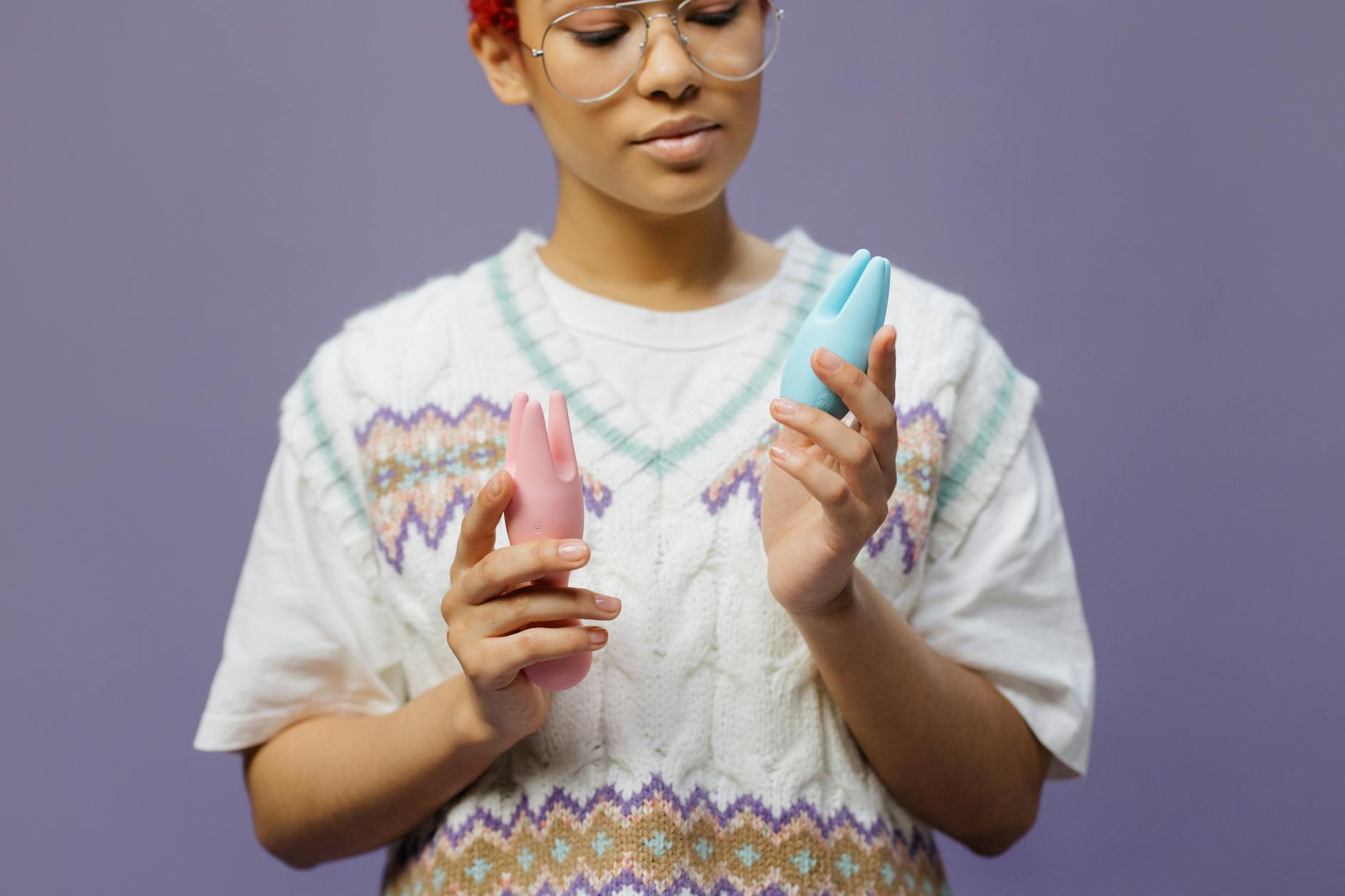
How to Use Lemon Vibrators After Stopping Antidepressants
Your sensitivity is coming back. Here's what to expect physically, how to rebuild arousal gradually, and why air-pulse clitoral vibrators work better than you might think during this transition.
When you stop antidepressants, your nervous system doesn't flip a switch. It recalibrates. For months or even years on SSRIs, your serotonin was chemically regulated. Pleasure centers in your brain got used to operating at a dampened volume. Your clitoris might have felt numb. Orgasms, if they happened at all, felt distant or muted. You probably got used to it, or at least made peace with it.
The moment you taper off, that doesn't instantly reverse. Instead, sensation slowly returns in waves. Some days you'll feel hypersensitive. Other days it's like you're back to baseline. This isn't a linear process, and expecting it to be sets you up for frustration.
The good news: your body remembers how to feel pleasure. Your neural pathways for arousal are still intact. You're not starting from zero. You're reclaiming something that was always yours.
SSRIs suppress dopamine and norepinephrine alongside serotonin regulation. When you remove that chemical brake, those neurotransmitters can spike unpredictably. You might feel more irritable, more anxious, or weirdly emotional during sex. You might also feel nothing at all, as if the sensitivity hasn't switched back on yet.
This is normal. It typically lasts two to four weeks, sometimes longer. If you're expecting to orgasm like you did pre-medication, you'll be disappointed. If you're expecting nothing, you might be surprised by a sudden rush of sensation one evening.
Many people feel a moment of panic during this phase. "What if I never feel pleasure again?" The data says otherwise. Studies on post-SSRI sexual function show that sensation and orgasmic capacity return in most people within three to six months. Not instantly, but reliably.
Traditional vibrators work through direct friction against sensitive tissue. When your clitoris is still re-awakening, direct contact can feel overwhelming or, oddly, completely numb. You can't modulate between "too much" and "just right" easily.
Lemon suction vibrators (also called air-pulse vibrators) work differently. Instead of vibration, they create gentle suction and release patterns that stimulate the clitoral nerve complex without requiring direct contact. This matters enormously during post-medication recovery because it allows you to:
Control intensity gradually. Most lemon clitoral vibrators like the Lem have seven or more intensity levels. You can start at pattern 1 (barely perceptible) and spend weeks there before moving up. That progression is the opposite of what traditional vibrators force.
Avoid overstimulation. If your clitoris is hypersensitive during those first weeks, suction feels less jarring than buzzing against raw nerve endings. The sensation is diffuse rather than concentrated.
Rebuild your sensitivity baseline. Air-pulse clitoral vibrators essentially retrain your nervous system by introducing sensation gradually. You're not forcing your body to feel; you're inviting it to.
Don't use anything for the first few days. Let your body settle. You're coming off a chemical that's been modulating your reward system for months. Even touching yourself might feel strange.
When you're ready (and only you know when that is), start with a lemon clitoral vibrator at the absolute lowest setting. Not because you want intense pleasure yet, but because you're gathering information. What does sensation feel like now? Where does it live in your body? Can you notice any response at all?
Set a timer for five minutes. Not because you're chasing an orgasm, but because you're observing. If you feel nothing, that's data. If you feel tingling, that's a good sign. If you feel overwhelming sensation, dial it down or stop.
This might feel less sexy than you want it to be. It's not. You're literally rebuilding the connection between your brain and your pleasure center. This is the foundation work.
Your sensitivity will likely increase noticeably during this window. Some days dramatically. Some days less so. The inconsistency is frustrating, but it's also proof that something is shifting.
Gradually increase your session time. Move from five minutes to ten, then fifteen. Experiment with higher intensity levels on your lem vibrator, but only when the lower levels start to feel familiar. Think of it like rebuilding fitness after a break. You don't jump back to your old routine; you build back up.
If you're with a partner, this is a good time to involve them minimally. I'm not suggesting joint exploration yet. Instead, let them know you're in recovery mode and might not orgasm, might not want penetration, might need things very different from before. Partners often feel relief at this permission. They've been navigating your dampened pleasure for months too.
If you notice any pain during this phase, stop immediately. SSRI discontinuation can sometimes affect pelvic floor tension, and pain is a sign you need a slower approach or a conversation with your doctor. How to use lemon vibrators if you have a sensitive cervix covers this in detail if you're concerned.
By week six or eight, most people notice that sensation has solidified. You're not swinging between numb and hypersensitive anymore. You have a consistent baseline again, even if it feels different from pre-medication.
Here's what might surprise you: sometimes that baseline feels better. Months off medication have given you space to think differently about pleasure. You might have processed some of the things that made you need medication in the first place. You might be in a different relationship, or the same relationship but with more presence. You might simply be ready to explore things you weren't before.
Many of my clients report that their capacity for pleasure post-recovery is different from pre-medication. Not necessarily stronger, but more nuanced. More under your control. Less tied to the circumstances around it.
Continue using your lemon sexual toy, but now you're in the experimentation phase rather than the recovery phase. Try different patterns. Explore for longer. See what feels good. Your pleasure center is coming back online, and you have time to learn this version of your body.
If you're coupled, the pressure to restart sex can feel immediate. It's not. Your body's recovery isn't a timeline they get to influence. That said, rebuilding pleasure together is often easier than rebuilding it alone and then trying to integrate it back into partnership.
The key is communication without expectation. "I'm rebuilding sensation after coming off my medication. I don't know what my timeline is. I'd like to explore this with you, but I need to go slow and I need zero pressure to orgasm." That sentence does so much work. It includes your partner without making them responsible for your recovery.
Consider exploring with your lemon clitoral vibrator together. Not for his pleasure or hers, but so you can narrate what's happening. "I can feel this pattern building sensation." "That intensity is too much right now." "This one feels nice." This converts solo recovery into shared discovery.
Most people see real shifts within three to six months. Some take longer. If you're at six months and still feeling almost no sensation, talk to your prescriber. It's possible you need a different tapering schedule, or it's possible that persistent post-SSRI sexual dysfunction (PPOSD) is at play. It's rare, but it's real, and it's worth ruling out.
Also check in with yourself about pressure. Sometimes we convince ourselves we feel nothing because we're so anxious about our recovery that we can't actually experience sensation. It's a real phenomenon. If that's happening, even just ten minutes with a lemon suction vibrator at the lowest setting, without any goal or expectation, can sometimes break the anxiety loop.
When you do regain sensitivity, you might notice something unexpected: relief. Not excitement at first, but relief. The relief of feeling like yourself again. That's real, that matters, and it's worth honoring.
You can use one as soon as you feel ready, which might be days or weeks. There's no medical reason to wait. What matters is that you approach it gently, without expectation. Many people find that starting with a lemon clitoral vibrator, which offers gradual intensity control, feels less overwhelming than jumping straight to traditional vibrators.
Probably not, but often better. Your nervous system has recalibrated. Your body might respond differently. Some people find their orgasms are more localized, some find them more full-body. The important part is that they're yours again, and they return once your body has enough time to reset.
Yes, but your experience might be inconsistent. On days when you're still at higher doses, sensation might be dampened. As you taper lower, you might feel more. This unpredictability is normal. Use it as information about where you are in the process rather than as a measure of whether recovery is working.
Completely normal, especially in the first two to four weeks. Your serotonin levels are still stabilizing. Dopamine, which is central to pleasure, is still finding its equilibrium. Feeling nothing doesn't mean something is broken; it means your body is catching up. Be patient.
That's also normal and actually a good sign. It means sensation is returning quickly. If it feels overwhelming, lower your vibrator intensity significantly or take a few days off. You can gradually reintroduce sensation once you adjust. Hypersensitivity during recovery is temporary.
That depends on your relationship and your comfort level. What I recommend: don't hide it out of shame, but also don't feel obligated to narrate every solo session. If you want to involve them, frame it as shared recovery, not as you replacing them. "I'm rebuilding sensation and I'd like to do some of that with you" is very different from "I need this toy because you're not doing it right."
Coming off antidepressants is hard. Rebuilding pleasure afterward is patient work. But it's work you're absolutely capable of doing. Your body knows how to feel. You're just giving it time and the right tools (like a Hello Nancy lemon vibrator) to remember. That sensitivity you're missing isn't gone. It's just resting. And soon enough, it comes roaring back.