
Let's name what's happening
You're trying to enjoy yourself, but your mind won't stop. You're thinking about work emails, the dishes, what you said yesterday, whether you're doing this right. Meanwhile, your body is supposed to be enjoying stimulation, and it's just.not.landing. That's not a failure. That's a focus problem, and it's wildly common.
I work with couples and individuals every week who report the exact same thing: the physical setup is fine, the partner (if there is one) is engaged, but attention has become the bottleneck. Pleasure doesn't happen in a vacuum. It requires mental presence. And when you're scattered, nothing lands.
Why your brain keeps pulling away
There are three big reasons pleasure loses focus.
Stress and activation. If you're in a state of hypervigilance, worry, or chronic stress, your nervous system is already hijacked. Your brain's threat-detection system is running hot. Sexual arousal requires the opposite. When cortisol is elevated, parasympathetic activation (the calm-down system needed for pleasure) takes a back seat. You're not being difficult. Your nervous system is protecting you from something it perceives as unsafe. Fixing this means addressing the underlying stress first, not just trying harder to orgasm.
Distraction as a habit. Some people have trained their brains over years to leave their bodies during sex as a coping mechanism. Maybe there was pressure, maybe there was pain, maybe there was just never permission to be fully present. Over time, your brain learned that checking out was safer than being there. Breaking that habit takes intention.
Performance pressure. The moment you start monitoring whether you're feeling good, you've left the experience. You've become an observer of your own body instead of inhabiting it. This is especially common if you've struggled with orgasm before, or if there's pressure from a partner to "hurry up" or "finish."
Why the Lem vibrator changes the game here
I recommend the Lem to clients with focus issues because of how it works mechanically. Unlike traditional vibration, the Lem uses suction and pulsing patterns that demand a different kind of attention. The sensation is novel enough that it pulls your brain out of the thought spiral and into pure sensation. You can't really think about your grocery list and feel suction at the same time.
There's also something about the steadier, more focused stimulation pattern that makes it easier to stay with. Your nervous system settles faster because there's less aggression to process.
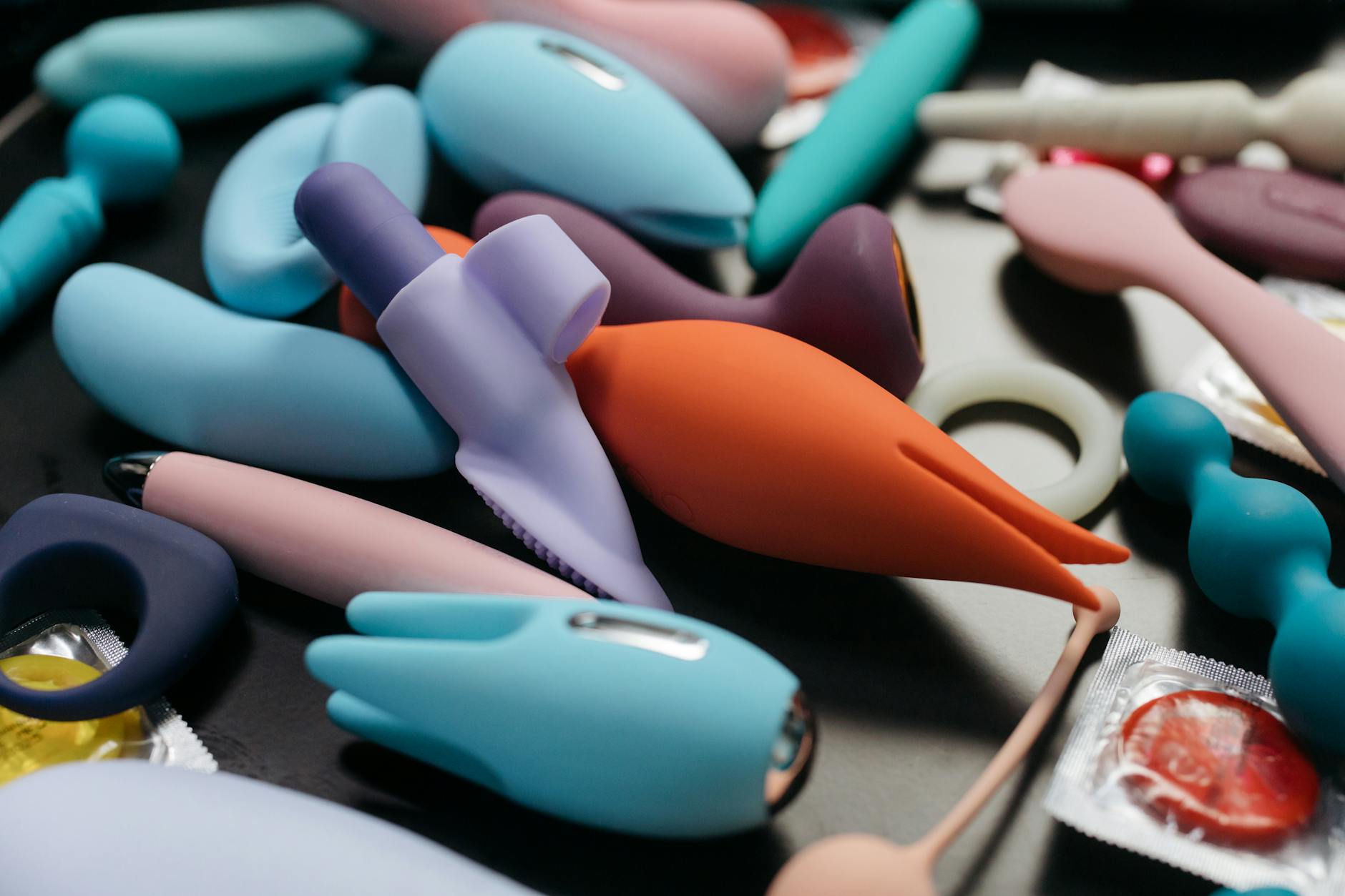
Photo by cottonbro studio on Pexels
The mental practices that work
The tool is only half the equation. Here's what actually rebuilds focus:
Start with nervous system prep. Before using the Lem (or anything), spend 5 minutes on breathing. Not meditation, not visualization. Just breathing. In for 4, hold for 4, out for 6. This activates your parasympathetic nervous system. You're telling your body it's safe to relax. Then use the vibrator.
Use a grounding technique during stimulation. This is borrowed from somatic therapy. While using the Lem, deliberately notice four things you can see, three things you can touch, two things you can hear, one thing you can taste. This keeps your brain tethered to the present moment instead of wandering to your to-do list. It sounds clinical, but it works because it gives your busy brain a job that's not "perform for me."
Start at the slowest setting. This matters. If you jump straight to intensity level 4 or 5, you're asking your body to process a lot at once. Start with level 1 or 2. Let your nervous system adjust. Let pleasure build slowly. Your brain will follow. Fast, intense stimulation often triggers the opposite of relaxation when you're already scattered. It triggers more noise.
Build a physical ritual around it. Use the Lem at a specific time, in a specific place, with the same preparation. Light a candle. Put your phone in another room. Change into something that feels good on your skin. Rituals signal to your brain that this time is marked as safe and separate. Your nervous system starts to trust it.
What to do when your partner is involved
If you're with someone else, the dynamic changes, but the principle stays the same.
The hardest part is usually admitting that focus is slipping. That can feel like a rejection of your partner, when it's really just a symptom of where you are right now. Talk about it without blame. "My brain is scattered tonight, and that's not about you" is true and matters.
Then agree on a slower approach. Use the Lem while they're present, but not performing. They're there. Maybe they're touching you elsewhere, maybe they're just present. But the goal isn't their pleasure right now. The goal is rebuilding your capacity for focus. Once you can hold attention with external stimulation, partnered pleasure becomes easier again.
If your partner has been pushing for speed or intensity, that pressure has to lift. Pleasure can't coexist with performance metrics. This is probably the most important conversation to have.
When to seek help
If scattered attention only happens during sex, the strategies above usually work within two to three weeks of consistent practice. Your nervous system learns faster than you think.
If scattered attention is everywhere (work, relationships, daily tasks), and not just during intimacy, that's worth addressing with a therapist or your doctor. Sometimes ADHD shows up more acutely during sex. Sometimes anxiety is the root. Sometimes it's both. Treatment doesn't mean something is wrong with you. It means you're taking your own presence seriously.
If you've been avoiding pleasure for years because of focus issues, individual therapy with a sex-positive therapist is worth considering. Somatic therapy specifically is designed to reconnect you with your body. A few sessions often shift things more than months of solo practice.
The reframe
Scattered attention during pleasure isn't a personal failing. It's information. Your nervous system is telling you something: there's stress, there's pressure, there's not enough safety. The Lem vibrator can help bridge that gap by offering a sensation that's intense enough to hold focus but steady enough to feel safe. But the tool works best when you're also addressing the underlying conditions. Stress management, communication with your partner, and permission to move slowly matter more than the device itself.
Your attention is valuable. When you're present, even for 10 minutes, with a lemon clitoral vibrator or anything else, you're telling yourself that your pleasure is worth thinking about. That's where it starts.
People also ask
Why is mental presence so important for pleasure?
Pleasure is a full-body and brain experience. Your brain regulates blood flow, arousal response, and the release of chemicals that create sensation and orgasm. If your attention is divided, your nervous system can't fully activate those pathways. Think of it like trying to watch a film while scrolling your phone. The content is there, but you're not really experiencing it. Presence is how you go from touching yourself to feeling yourself.
Can the Lem vibrator help if my mind wanders during sex?
Yes, often significantly. The Lem's suction and pulsing pattern creates a sensation that's novel and distinct enough to pull your attention back from distraction. Because it feels different from what your brain might expect, it has a naturally grounding effect. That said, the vibrator is most effective when combined with the breathing and grounding practices mentioned above. The device works best when your nervous system is already somewhat calm.
How long does it take to rebuild focus during pleasure?
Most people notice improvement within two to three weeks of consistent practice using these techniques. Some feel the shift within a few sessions. The timeline depends on how deeply rooted the scatter is. If it's recent (triggered by a life change or new stress), it usually shifts faster. If it's been years, give yourself grace. Your nervous system is learning a new pattern. That takes time.
Is scattered attention during sex a sign of a deeper problem?
Not necessarily. Sometimes it's situational: high stress, new relationship, recent life change, or even just normal variation in what your body needs on a given day. Other times it points to anxiety, trauma, ADHD, or relationship dynamics that need attention. The way to tell the difference is context. If focus problems happen only during sex and only recently, it's likely situational. If they're everywhere in your life, or if they coincide with a specific event, there's probably something bigger to address.
What if my partner thinks scattered attention means I'm not attracted to them?
This is a common misunderstanding, and it's worth clearing up directly. Scattered attention during sex usually has nothing to do with attraction and everything to do with nervous system activation. You can be wildly attracted to someone and still struggle to stay present because you're stressed, tired, or dealing with something underneath. Have a conversation outside the bedroom. Explain what's happening. Ask for their support in slowing down. Use the Lem alone first, rebuild your own capacity for focus, then bring that presence back into partnered sex. Your partner will feel the difference.
Can I use focus techniques with other vibrators, or is the Lem special?
You can use these techniques with any tool. That said, the Lem's design makes it particularly effective for focus work because the sensation is different enough to interrupt rumination. A traditional vibrator works too, but it might take longer to shift your attention. The grounding and breathing practices matter more than the device itself. Start with whatever you have access to, then experiment with the Lem if you want to try a different sensation pattern.
Get in touch at /contact if you'd like to talk through what might help you specifically. You're not alone in this.