
Let's name the thing nobody talks about
Your partner brings up the Lem Vibrator. Maybe they saw it online, or a friend mentioned it, or they're just curious. And suddenly you're stuck between two feelings at once. Part of you is intrigued. Part of you is genuinely nervous. That's not a sign something is wrong. It's actually pretty normal.
The nervousness usually isn't about the device itself. It's about what it might mean. Will they prefer it to me? Does this mean I'm not enough? What if I don't know what I'm doing? What if it feels weird?
Here's what I want to tell you first: those questions are legitimate. And they're also answerable. Nervousness is just information you haven't unpacked yet.
Why the anxiety shows up
There are usually three roots to this particular flavor of hesitation, and they're worth naming because naming them defuses half the power.
First: fear of replacement. The lemon clitoral vibrator is efficient. It gets results. That efficiency can feel threatening if you're already carrying quiet insecurity about your role in pleasure. But here's the thing. A tool that helps your partner feel good is not a replacement for you. It's an addition. Think of it like someone learning a new recipe you love. The recipe doesn't make their hand less valuable. It makes dinner better.
Second: uncertainty about your own desire. You might not have explored devices much yourself. The idea of introducing one with a partner feels vulnerable because you're learning together, and learning together means being a little lost together. That rawness can feel unsafe if you're not used to it.
Third: worry about performance. You might be thinking: if they want to use this with me, what does that mean about what I'm supposed to do? Am I supposed to operate it? Does it change the dynamic? Suddenly you're imagining a script that doesn't exist, and nervousness lives in the gap between imagination and reality.
The conversation before anything physical
This is the make-or-break piece, and I mean that seriously. If you jump straight to the device without talking, you're asking nervousness to resolve itself through action. It won't.
Instead, have a regular conversation. Not a big announcement. A real one. Try something like: "I'm interested in exploring this with you, but I'm also a bit nervous, and I want to talk about what we're both hoping for." That sentence does three things at once. It signals yes. It names your feelings without shame. And it puts you on the same team.
Then listen to what they say. Most of the time, when someone wants to introduce a lemon vibrator to shared pleasure, they're thinking about one of three things: they want to experience a different kind of sensation with you present, they want to give you pleasure in a new way, or they're curious about what it feels like together. Those are completely different conversations.
Ask clarifying questions. "What made you think about trying this?" "What do you hope it will add?" "Are you imagining we'd use it together, or you'd use it, or...?" The specificity of the conversation directly reduces the nervousness of the experience.
Starting small and non-committal
You don't have to go from zero to full integration overnight. The Lem Vibrator exists on a spectrum of use, and you can experiment at whatever pace actually feels good to you.
If you're nervous, consider one of these as a starting point:
Just seeing it. Ask your partner to bring it out when you're not actively sexual. Let it sit on the nightstand. Get used to looking at it. Novelty anxiety drops dramatically once something stops being foreign.
Solo exploration first. Some people find it helpful to use the device alone before involving a partner. This isn't required, but if you're curious about what it actually feels like without the pressure of someone watching, that information matters. You can't guide something you've never experienced.
External presence, not hands-on. Your partner could use it on themselves while you're present and engaged, but not involved in operating it. You're there. You're watching. You're touching them in other ways. The device is one part of the experience, not the whole experience.
Hands-on together, low stakes. One of you holds it, the other gives feedback. "A little higher, more pressure, slower, keep that." Communication becomes the anchor point, not the device itself.
Each of these is a completely legitimate place to start. None of them is practice for a "real" version. They're all real.
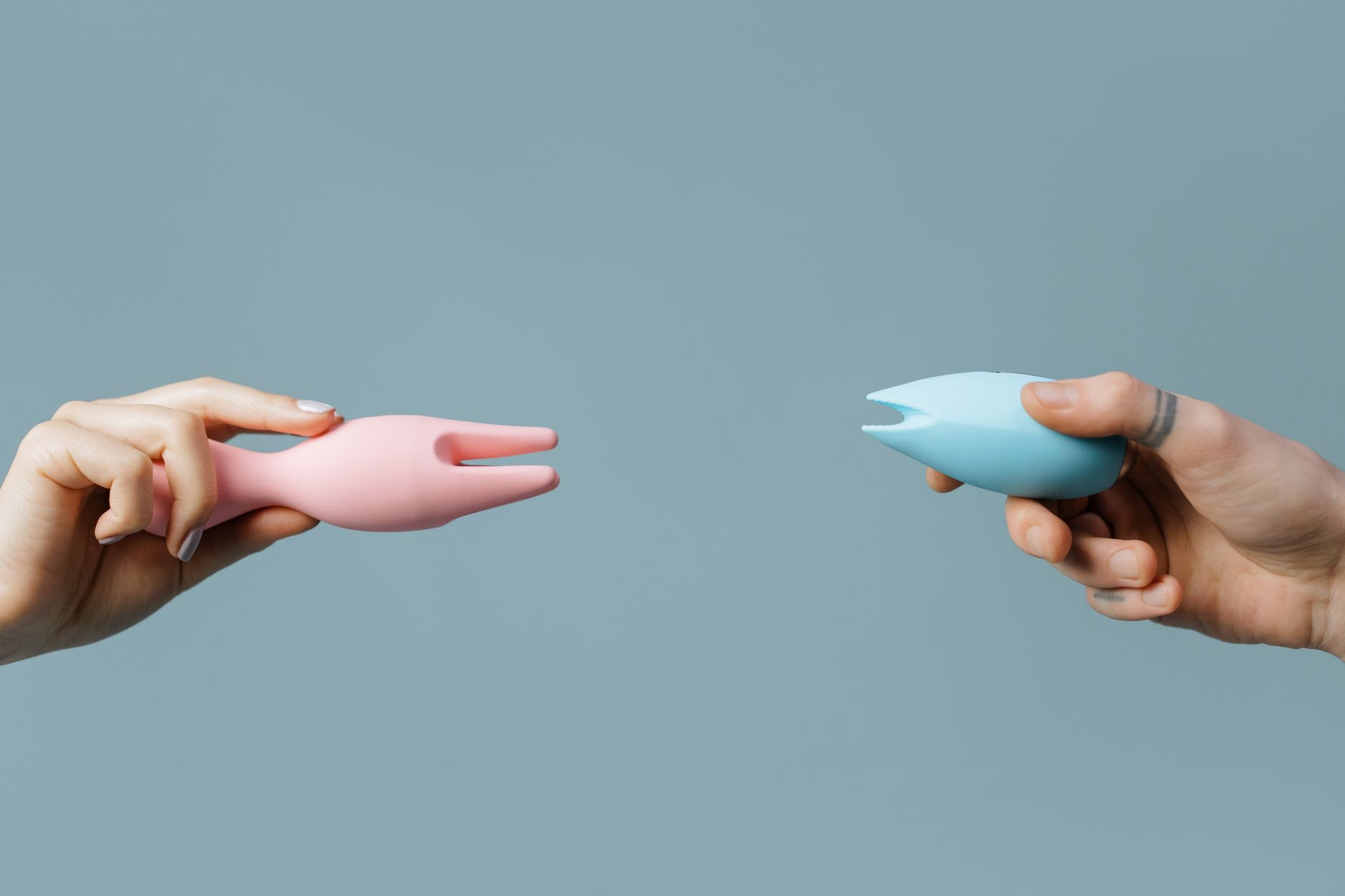
Photo by cottonbro studio on Pexels
What to actually do when you're using it together
Once you've had the conversation and decided to move forward, the mechanics matter less than the communication.
Before you start, agree on a few simple things. Do you want feedback out loud, or is silence okay? If someone wants to pause, what does that look like? What kinds of touch feel good alongside the device? Some people love being caressed or kissed while using a lemon clitoral vibrator. Some people want stillness. Neither is wrong.
Start with the device on the lowest setting. The Lem has multiple patterns, and pattern one exists for a reason. Your body doesn't need the machine to be working at full intensity right away. Lower intensity also means you have more room to increase, which keeps the experience under your control.
If you're the one holding it, move slowly. Let your partner guide you. "Up a little, to the left, stay there." These small adjustments feel enormous and they keep you actively involved. You're not just watching a device do its thing. You're participating in finding what works.
If your partner is operating the lemon vibrator, you get to just receive. This is harder than it sounds for some people because receiving without controlling can feel passive. It's not. Receiving is an active choice to let yourself be pleasured. That takes trust and vulnerability.
When nervousness still shows up mid-experience
Sometimes you start and realize you're more uncomfortable than you thought. That's not failure. That's information.
You can pause. You can say "I want to slow down" or "Can we try something different?" or even "I need a break." A partner worth exploring with will respond to that without disappointment or negotiation. If they don't, that's a different conversation entirely and it's probably more important than the device.
Most of the time, when you pause and talk, the thing that felt wrong becomes clear. Maybe it's performance pressure. Maybe the intensity was too much. Maybe you realized you wanted more control than you have. Maybe you just needed a moment to remember that this is supposed to feel good and you get to decide what good means.
Take that pause. Talk about it. Then decide if you want to try again or if you want to wait. Both are valid. Exploration isn't a deadline.
The shift from nervousness to curiosity
After you've had the conversation, started small, and actually experienced using a lemon vibrator together, something usually shifts. The nervousness transforms. It becomes less "what if this goes wrong" and more "oh, I wonder what that would feel like."
That's when the real pleasure starts. Not because the device is better, but because you've moved through the uncertainty together and found that the other side isn't scary. It's interesting. And you survived it. Your partner still loves you. You still feel like yourself. The device is just a thing you're exploring, not a referendum on your relationship.
Many couples find that once they get past the initial nervousness, they understand each other better. You learn what your partner's body actually responds to. You see what makes them lose focus or lean in. You learn your own body differently too, because someone else is engaged with your pleasure in a new way.
That knowledge is worth the awkwardness of getting there.
Frequently asked questions
What if my partner is disappointed that I'm nervous?
That's worth addressing directly. A partner who punishes vulnerability by making you feel guilty for caution isn't safe to explore with. Real exploration requires both people to feel comfortable saying yes and no. If someone can't hold space for your nervousness, that's not about the device. That's about the relationship dynamic, and it matters more than the clitoral vibrator.
Can using a lemon vibrator fix a struggling relationship?
No. If the foundation isn't solid—if communication is poor, trust is fractured, or desire is disconnected—a device won't patch that. It might actually amplify the problems. Make sure the relationship is in a place where this feels like an addition to good intimacy, not a Band-Aid for something broken.
What if I try it and I hate it?
You don't have to keep using it. You can try it once and decide it's not for you, and that's a complete and valid choice. The pressure comes when you feel like you "should" like it because your partner suggested it. You shouldn't have to. Your pleasure is not negotiable. If the lemon vibrator isn't the tool for you, that's information. There are other ways to explore together.
Does using a device mean my partner thinks I can't orgasm on my own?
Usually, no. More often, a partner who suggests this is thinking about expansion, not deficit. They want to feel you come differently. They're curious about what else is possible. The fact that you can orgasm without a device doesn't mean there's no value in experiencing orgasm with one. Different isn't better or worse. It's just different.
How do I know if we're ready to try this?
You're ready when both people want to explore, you've had an actual conversation about it, and neither person feels pressured. Not excited yet is fine. Nervous is fine. Pressured is not. If you feel pressured, you're not ready. Wait until you don't.
What if the nervousness never fully goes away?
It doesn't have to. Nervousness and excitement live in the same part of the nervous system. You can be nervous and willing at the same time. The goal isn't to feel confident. The goal is to move forward anyway, with communication and care. That's actually braver.
The real thing happening here
When a partner wants to explore with a lemon clitoral vibrator, they're not trying to replace you or fix you or say you're not enough. They're saying: I want to know you more. I'm curious about your body. I think we could feel something new together.
That's vulnerable on their end too, by the way. Suggesting something like this risks rejection or feeling unsafe themselves. You're both taking a small risk.
The nervousness you're feeling right now is the sound of you considering something new. That's not a red light. It's just signal that something is shifting. You get to decide if you want to shift with it. And if you do, take it slow, talk a lot, and remember that clumsy, awkward exploration together is actually how intimacy deepens.
Your pleasure matters. Your comfort matters. Your partner's desire to explore with you matters too. These things aren't in conflict. They can all be true at the same time. That's where the good stuff lives.
If you want to talk through your specific situation—whether nervousness about shared pleasure, relationship dynamics around desire, or something else—reach out. I'm here to help you figure this out.