
Here's the thing about resistance
When someone says they don't want vibrators in the relationship, what they're usually saying is one of three things: "I don't understand why you need this," "I'm worried this means something about me," or "I'm not ready to talk about this yet." None of those is "never ever." And that distinction matters because it tells you exactly where to start.
I've worked with couples on this for years. The pattern is always the same. One person brings up toys, the other person shuts down, and then both of them get stuck in a loop of resentment or avoidance. What breaks that loop isn't pushing harder. It's separating the two conversations that are actually happening at the same time.
Why the no actually means something different
When a partner resists toys, they're often protecting something. Maybe they worry that a vibrator means their touch isn't enough. Maybe they grew up with shame around pleasure and toys feel threatening. Maybe they've had bad experiences with partners who used toys as a replacement instead of an addition. Maybe they're just uncomfortable with conversations about sex and toys feel like a weird way to start.
Here's what matters: most of the time, the resistance isn't about the Lem vibrator itself. It's about what they think the toy represents. And if you try to sell them on the toy, you're fighting the wrong battle. You're arguing about the object when the real issue is about desire, reassurance, or safety.
The conversation that needs to happen first
Before you even mention toys, you need a conversation that has nothing to do with toys. This is what I call the "ground truth" conversation. You're asking three things, and you're asking them genuinely.
First: "I want us to feel connected. Does that matter to you too?" Don't assume the answer. Listen. Sometimes people say no to toys because they don't feel safe in the relationship or they're dealing with resentment that has nothing to do with pleasure.
Second: "What does pleasure mean to you right now?" Not what should it mean. What does it actually mean. Some people have no reference point for pleasure. Others are numb from routine. Others feel guilty about wanting it. You need to know which one you're dealing with.
Third: "If we could improve this part of our connection, what would that look like to you?" Notice I'm not saying "Would you ever try toys?" I'm asking what they actually want. Sometimes the answer is more time together. Sometimes it's less pressure. Sometimes it's genuine exploration, and vibrators could help. But you won't know unless you ask without an agenda.
These conversations are uncomfortable. That's not a bad sign. That's a sign you're moving toward real trust.
What resistance actually masks sometimes
I've seen resistance shift dramatically when the underlying fear gets addressed. A partner who said "absolutely not" to any toys suddenly became curious once their actual worry came out. Common ones: "I feel like I'm not enough for you." "I don't want to feel like I'm performing." "What if I can't get it to work and we're both awkward?" "Pleasure feels greedy to me."
Once you know what the real concern is, you can actually answer it. If it's "I feel like I'm not enough," then introducing toys becomes a conversation about abundance, not replacement. If it's performance anxiety, you're talking about how toys remove pressure, not add it. If it's shame, you're talking about reclaiming pleasure together.
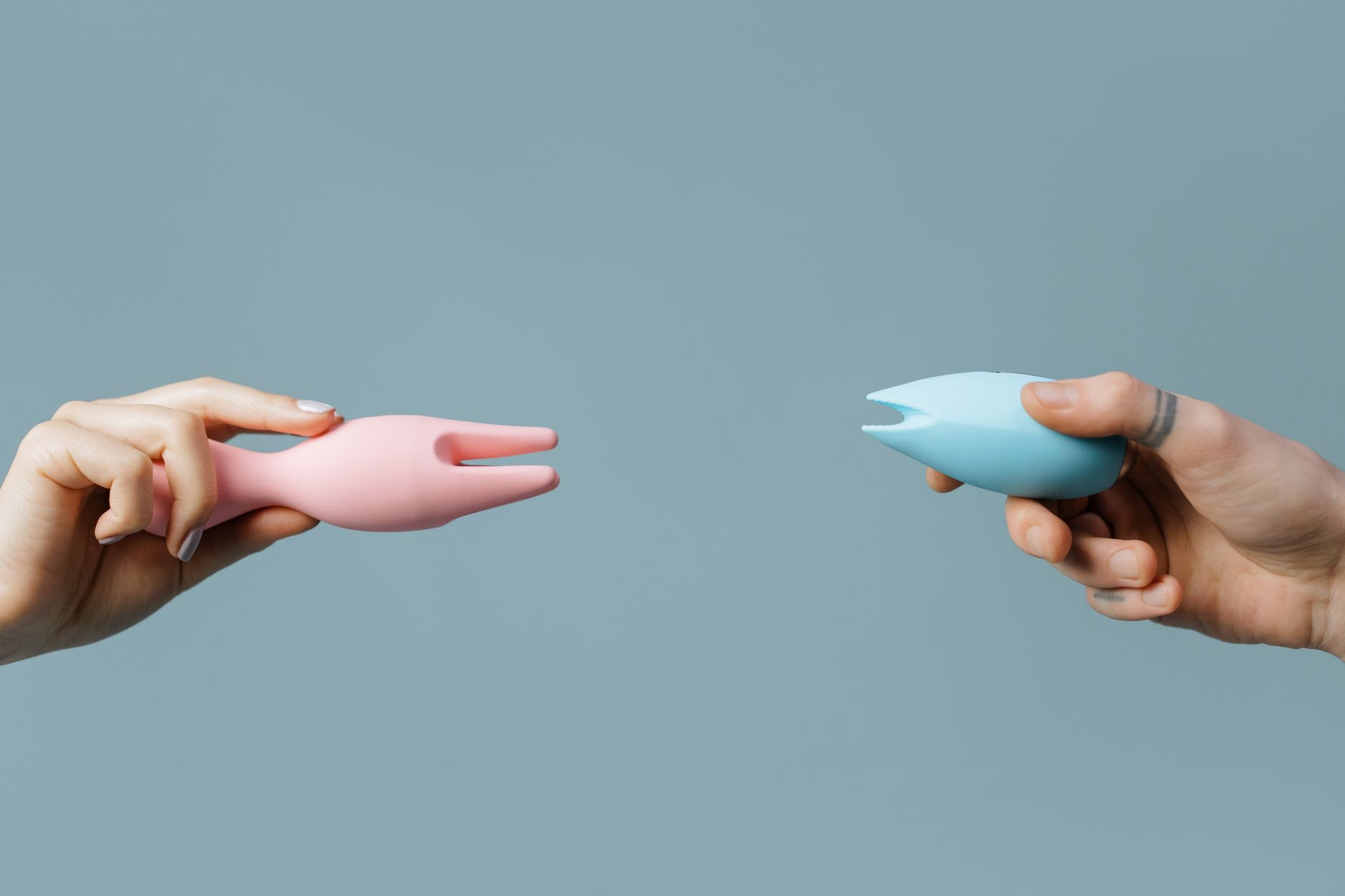
Photo by cottonbro studio on Pexels
How to reframe toys when someone's said no
Once you've had the ground truth conversation, reframing becomes possible. Here's what works:
Reframe 1: Not replacement, rhythm. "I want us to explore this together. A toy like the Lem isn't about me needing something you can't give me. It's about us finding new rhythms together. Like how adding a song to a playlist doesn't mean the old songs stopped mattering."
Reframe 2: Removing pressure. "One thing that might help us both is if we took some of the performance pressure off. Toys can actually do that. They shift the focus from "Am I doing this right?" to "What feels good right now?" That's less pressure for both of us."
Reframe 3: Curiosity, not demand. "I'm curious about this, and I'd rather we explore it together than me do it alone. I want you there. But I also respect that you're not ready yet. What would make you less nervous about it?"
The language matters. You're not selling them on toys. You're inviting them into curiosity. There's a massive difference.
The introduction that actually works
If they're starting to move from "no" to "maybe," here's how to introduce the Lem without triggering the resistance again.
Step one: Education over experience. Show them how the device works. Not in a sexual context. Just show them the settings, the design, the materials. "It's silicone, hypoallergenic, waterproof. It has five settings. It's made for simplicity." Demystification kills a lot of anxiety.
Step two: Start with a nonsexual context. "Want to try it just to see how it feels? Not for sex. Just sensation." Exploring sensation outside of pressure removes the performance frame entirely. They might hold it, feel the vibration pattern, get used to it existing.
Step three: Never make it a prerequisite for intimacy. If toys become the gateway to touch, you've just added pressure. Toys should be optional, occasional, interesting. Not required.
Step four: Let them decide the pace. If they touch it once and want to put it away, that's fine. If they want to watch you use it first, that's fine. If they want to use it on you before you use it on yourself, that's fine. The only rule is that there's no rush.
What happens when they say no and mean it
Sometimes, after the conversation, after the reframing, after the introduction, someone still says no. And they mean it. That's real information. At that point, you have a choice: you respect the boundary, or you realize you two have incompatible needs.
If you respect the boundary, you're choosing the relationship over the tool. That's a valid choice if it's actually yours. But you need to be honest about it. Don't resent them later for a boundary you agreed to. That poisons everything.
If you realize you have incompatible needs, that's also real information. It doesn't mean the relationship is doomed. It means you need to keep talking or you need to decide if this is a dealbreaker. But you get to decide that consciously, not accidentally through resentment.
Rebuilding after the tension
If you've already had the "I want toys" conversation and it went badly, there's usually tension now. That tension doesn't go away by pretending it didn't happen. But it can shift if you deliberately rebuild trust.
Take toys off the table for a month. Genuinely. Use that month to reconnect in other ways. Longer foreplay. More touching. More time. More vulnerability in non-sexual contexts. What you're doing is rebuilding the sense that intimacy is about the two of you, not about any external tool.
After that reset, the conversation becomes easier. You're not coming from a place of "my needs aren't being met." You're coming from a place of "we're good together, and I'm curious about exploring more together." That's a completely different vibe, and most people respond to it.
When curiosity finally appears
If they move toward curiosity, the introduction becomes playful instead of defensive. "Okay, I want to try this, but I have questions." Perfect. Answer every question without defensiveness. "Will it be weird?" "Probably for about 30 seconds, then it won't be." "Can I control it?" "You have the remote, you control the pace." "What if we hate it?" "We put it away and never use it again. No judgment."
The Lem clitoral vibrator is designed to be intuitive. It has five settings, clear controls, and it's made for people who are exploring, not just for people who've already committed to toys. If they do try it, start on the lowest setting. Let them get curious about the sensations. No rush to intensity or orgasm. Just sensation and exploration.
The partner who was saying no might surprise you. They might hate it and that's fine. Or they might realize that watching their partner pleasure is actually pretty hot. Or they might enjoy it more than they expected. But the important thing is that they got there through trust and conversation, not through pressure or resentment.
What you're actually building here
When you navigate this well, you're not just introducing a toy. You're proving to your partner that you can have hard conversations, respect their boundaries, and still get curious about pleasure together. That builds something deeper than the toy itself. It builds the kind of trust where someone can say "I'm scared" and know you're not going to make them feel stupid for being scared.
That's what actually transforms "no" into "maybe," and "maybe" into genuine interest. Not the Lem vibrator itself. The safety to explore without shame or pressure.
FAQ
What if my partner finds out I have a toy and they're angry?
Take accountability immediately. Don't defend. Don't say "it's no big deal." Say "I get why you're upset. I should have talked to you first." Then actually listen to what they're angry about. Often it's not the toy. It's feeling surprised or excluded. Once they feel heard, you can have the actual conversation.
Is it manipulative to try to convince my partner to use toys?
No, if you're being honest about what you want and why. Yes, if you're pretending it doesn't matter to you when it does. The integrity is in saying "This matters to me. I'd love to explore this with you." and then accepting their answer, not in hiding your desire or disguising it as something casual.
Can toys fix a relationship that's already struggling?
No. If there's not trust and communication, toys just add another thing to fight about. Fix the foundation first. Build the communication, rebuild the safety, and then toys might enhance something that's already working.
What if they try it once and never want to again?
That's data. They tried it. They didn't love it. That's fine. Don't push. Sometimes people need to try something once to know it's not for them. Other times they need to try it five times before it clicks. You can ask gently, "Would you ever want to try again?" If the answer's no, let it go.
Should I use the toy when my partner isn't interested?
Yes, absolutely. Solo pleasure is completely valid. But be thoughtful about it. Don't hide it or make it weird. If it comes up, you can say "I enjoy this. I hope that doesn't bother you." Some partners will eventually be curious precisely because they see you enjoying it without shame.
How do I know if my partner will ever come around?
You don't. That's the honest answer. Some people shift. Some people stay firm. What you can control is whether you're clear about what you want, whether you respect their boundary, and whether you decide this is a dealbreaker or not. That clarity matters more than the outcome.
The long view
Resistance to toys usually isn't resistance to pleasure. It's resistance to change, or to vulnerability, or to conversations about desire. Once you understand that, you can work with what's actually there instead of fighting the object. The Lem vibrator is just a tool. The real work is building the trust and communication that makes shared exploration possible.