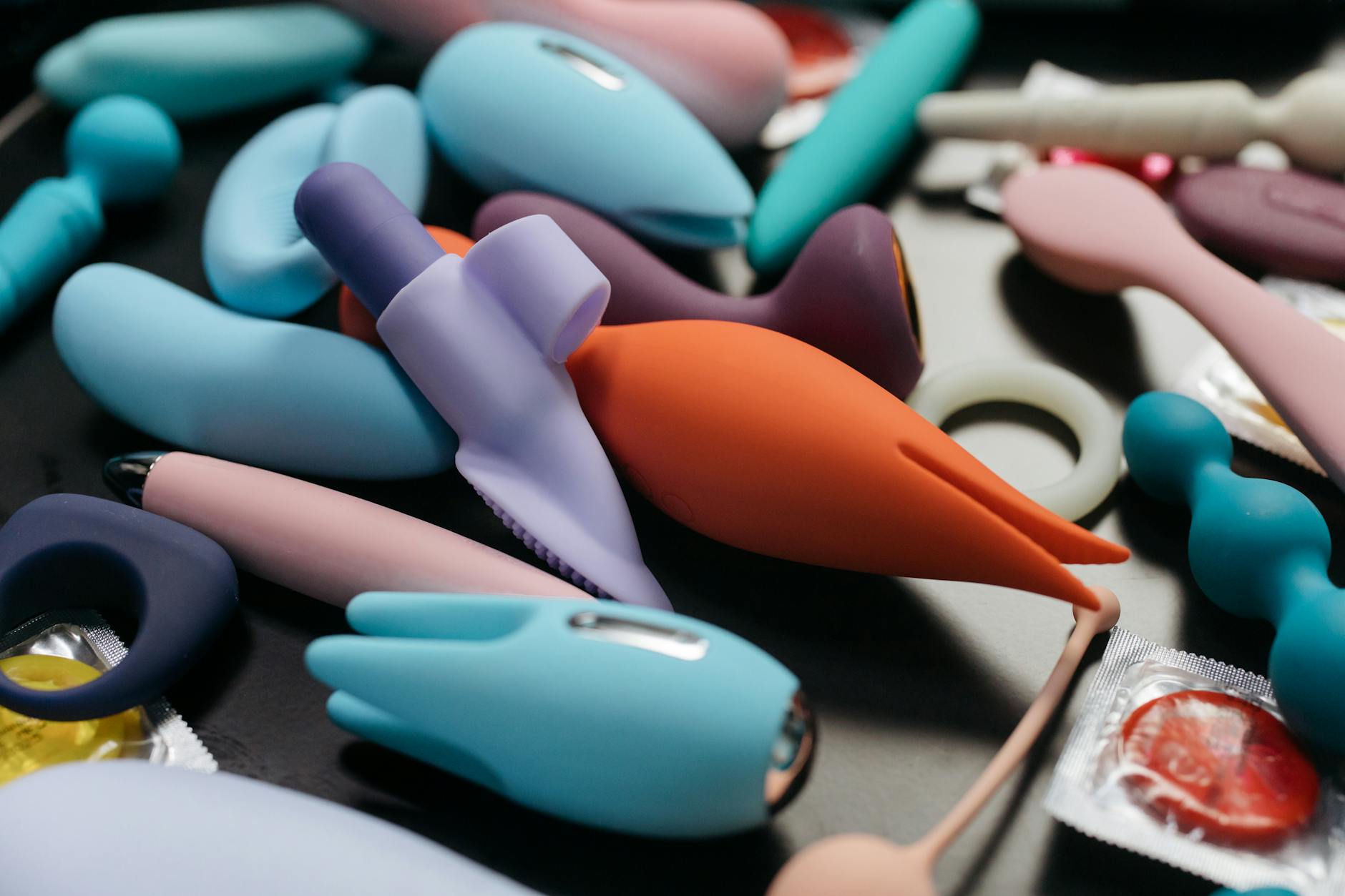
Let's start with the obvious part
Your pleasure doesn't stay the same all month. Hormonal shifts shape not just whether you want sex, but how you want it. The intensity of stimulation that feels perfect during one week might feel too gentle or too intense the next. Most people blame themselves for this inconsistency. The truth is simpler. Your nervous system is responding to real biochemical changes, and once you know what's happening, you can use a clitoral vibrator like the Lem exactly the way your body wants it each week.
How your cycle shapes sensation
Estrogen climbs in the first half of your cycle, peaks around ovulation, then drops sharply before your period. Testosterone, though produced in smaller amounts, also rises and falls with predictable timing. These hormones don't just affect arousal. They change how sensitive your nerve endings are, how quickly blood flows to your genitals, and how your nervous system interprets touch.
During the follicular phase (days 1-14, roughly), rising estrogen creates a state of heightened sensitivity. Your clitoral tissue swells slightly, neural responsiveness increases, and lighter stimulation often feels satisfying. Many people report that gentler patterns feel more pleasurable during this window.
Around ovulation, testosterone peaks alongside estrogen. This combination creates what feels like a wider pleasure bandwidth. Heavier pressure, faster patterns, multiple types of stimulation at once.all become more appealing. Your body can tolerate and enjoy more intensity.
After ovulation, progesterone rises while estrogen and testosterone drop. This luteal phase often brings a paradox. Some weeks you want no stimulation at all. Other weeks you crave deep, sustained pressure.because the tissues are slightly less sensitive, you might need more intensity to reach the same sensation.
Mapping your cycle to your Lem settings
The Lem Vibrator has multiple intensity levels and patterns. Rather than picking one "best" setting and sticking with it, think of your device as a responsive tool that adapts to four distinct weeks.
Menstruation (days 1-5). Sensitivity is unpredictable during bleeding. Some people find pleasure grounding and helpful. Others find any stimulation irritating. If you want to use your Lem during this window, start at pattern 1 or 2.the gentlest options.and let your body tell you if it wants more. If nothing feels good, that's completely normal. Skip it and return to pleasure when your body signals readiness.
Follicular phase (days 6-13). This is often your sweet spot for gentle, precise stimulation. The Lem's lower intensity patterns work beautifully here. Patterns 1 through 3 tend to feel refined and satisfying. Your clitoral tissue is responsive, so lighter touch produces strong sensation. This is a good week to experiment with pattern variety rather than cranking up intensity.
Ovulation (days 14-16). Your body craves more. If you've been using patterns 2-3, this is the week to move toward 4-5. Some people find that combining multiple sensations feels best now.using the Lem alongside other stimulation, or extended sessions that build gradually. Your tolerance for intensity peaks, and your nervous system can process more complex input.
Luteal phase (days 17-28). This is where most people get stuck, because luteal pleasure is contradictory. Early luteal (days 17-21) sometimes wants sustained pressure.think pattern 4 or 5, held steady rather than varied. Late luteal (days 22-28) often wants nothing, or wants very deep, slow stimulation. Some people describe it as needing the Lem to feel heavier and more grounding. Experiment with holding the device still against your body rather than moving it, or using patterns at lower speeds for longer durations.
The tracking piece that changes everything
None of this matters if you don't know where you actually are in your cycle. Most people guess. Guessing fails consistently.
Start tracking your cycle for two months using any method that works.a simple calendar, a cycle app like Flo or Clue, or even a notebook. Track: start date of bleeding, when you notice cervical mucus changes, when your energy shifts, and.this is key.when your pleasure preferences change.
After two cycles of data, patterns emerge. You'll see that "week 2 feels amazing" or "days 20-24 I want nothing." This personal data becomes your manual. Bookmark it. You're not trying to fit a textbook cycle. You're learning your actual body.
Once you know your pattern, the week before you enter a new phase, remind yourself. Text yourself a note. Set a phone reminder. Tell your partner if you share pleasure. "This week I'm going to want gentler sensation" or "Next week, more intensity feels better." This small act of planning prevents frustration and disappointment.
The partner conversation
If you're using your Lem Vibrator with a partner, the cycle piece becomes a shared skill. Most partners worry that using a vibrator means they're not enough. They're not. If your pleasure needs shift with your cycle, that's biology, not a referendum on your relationship.
The conversation looks like: "I've noticed my body wants different things at different times in my cycle. Some weeks lighter stimulation feels amazing. Other weeks I need more intensity or a different kind of touch. I want to use my Lem in a way that matches what my body is asking for, and I want you to know what that means each week." Then you actually tell them. "This week, gentler patterns work best. Next week, I'm going to want more." This transforms the vibrator from a mystery object into a tool you're both understanding together.
Many couples find that syncing their pleasure preferences with the cycle actually deepens intimacy. You're not just having sex. You're having a conversation about what your body needs. That's radically different.
What happens when intensity preferences feel stuck
Sometimes your cycle seems to follow a pattern, but nothing ever feels good. Or you crave intense sensation during every phase and nothing else registers. This is worth investigating.
Antidepressants, hormonal birth control, and stress all flatten or shift sensation. If you recently started medication or changed contraception, your cycle-pleasure map becomes obsolete. Give yourself two full months on the new protocol before assuming your new baseline is permanent. Your nervous system needs time to adjust.
Chronically high stress keeps cortisol elevated, which suppresses the hormonal fluctuations that create pleasure variation. If you're in a high-stress season, you might notice your cycle feels muted overall. That's a signal to address stress, not to blame your body.
Pelvic floor tension also flattens sensation. If your entire pleasure bandwidth feels narrow, a pelvic floor physical therapist can help you learn to relax these muscles, which often restores the full range of sensation that comes with cycle changes. Once the floor relaxes, you'll likely notice cycle variation returning.
If you're consistently not feeling pleasure that matches the theory, talk to a healthcare provider. That's useful information.
The pattern that helps most people
Here's what I see work most consistently: during the first half of your cycle, use your Lem for longer sessions at lower intensity. During ovulation, feel free to get experimental and intense. During the luteal phase, use your Lem for shorter sessions or skip it entirely if nothing feels good. Don't fight what your body wants. Work with it.
This isn't complicated. It's just meeting your body where it actually is, rather than where you think it should be. Once you do that, pleasure stops feeling like a problem that needs fixing. It becomes a conversation between you and your own biology.
FAQ
Can I use Lem Vibrator the same way all month?
Yes, physically. But you're working against your own neurobiology rather than with it. Some weeks the same setting will feel weak. Other weeks it will feel overwhelming. You can maintain one approach, or you can spend two minutes checking in with what your body wants and adjusting accordingly. The second option is almost always more pleasurable.
Does birth control stop cycle-related pleasure changes?
Not entirely, though it does flatten them. Hormonal birth control suppresses the natural hormone fluctuations that create pleasure variation. You might notice a narrower range of intensity preferences, or preferences that change more subtly. Copper IUD users typically retain full cycle variation. Hormonal IUD and pill users often experience partial flattening. Non-hormonal methods like condoms or fertility awareness don't affect the cycle at all.
What if my partner and I have opposite cycle patterns?
You're living in the same body, so alignment is impossible. What works is communication. "I'm in my high-intensity week. You're in low-intensity week. Here's how we make that work." Sometimes that means prioritizing one person's preferences, sometimes it means compromising, sometimes it means taking turns. The point is knowing what you're dealing with instead of blaming each other for wanting different things.
Is it normal to want no pleasure at certain times in my cycle?
Completely normal. Late luteal (the days before your period) often brings zero interest in genital stimulation. Your body is signaling a need for rest, not pleasure. Listen to that. The Lem will be here next week. Your body's wisdom is more important than any consistency.
Can I use the Lem differently than my partner does?
Absolutely. People with different body chemistry, different hormone levels, different nervous systems.all respond differently. Your perfect setting might be their overwhelming one. Exploring together means finding what works for each of you separately and together, without assuming there's one right way.
How long does it take to map my actual cycle pattern?
Two full cycles, roughly 60 days. After that you'll see patterns. After four cycles, you'll be able to predict your preferences with reasonable accuracy. This is worth the investment. You're learning a language your body speaks for the next 30-40 years. Getting fluent now saves frustration later.