How to Use Lem Vibrator When Clitoral Stimulation Feels Numb During Partnered Sex
Your sensitivity vanishes the moment your partner touches you. It's not broken. Here's what's actually happening and how direct clitoral stimulation with a lemon vibrator brings sensation back.
You're alone, things feel incredible. Your clitoral sensation is sharp, responsive, exactly where you want it. Then your partner arrives. The moment they touch you there, something switches off. Not gradually. Immediately. Like someone pulled a dimmer all the way down.
You're not numb, exactly. You can feel pressure. But sensation? The delicious feedback that made you feel alive five minutes ago? Gone. This is one of the most confusing sexual experiences, partly because it makes no physical sense. Your clitoral nerves haven't disappeared. Your body is in the room. So why does pleasure suddenly feel like you're touching yourself through a thick glove?
This is almost always a nervous system thing, not a physical problem. Here's what's actually happening: during solo play, your brain is in a narrow focus state. There's no performance pressure. No awareness of being watched. No small voice asking "Am I taking too long?" or "Does my body look right from this angle?" Your nervous system feels safe enough to remain in parasympathetic activation, which is the state where pleasure signals fire cleanly.
The moment a partner joins, your brain's threat detection system activates, even if your partner is kind and the setting feels safe. You're suddenly aware of being perceived. There's an audience, even if it's just the one person you chose. Your nervous system reads this as a mild activation alert. Blood shifts from your clitoris to your larger muscle groups. Cortisol ticks up slightly. Your parasympathetic nervous system (the pleasure system) downshifts to make room for sympathetic activation (the alert system).
The result: numb sensation. Or more accurately, muted sensation. Your clitoral nerves are still firing, but your brain isn't receiving the signal with full volume. You're running on maybe 30 percent of your solo sensitivity.
Often layered on top of the nervous system shift is a subtle dissociation. You're present in your body solo because there's nowhere else to go. With a partner, your attention splits. Part of you is tracking their pleasure, their rhythm, whether you're responding "right." Part of you is in your body. Part of you is outside the scene, watching.
This fragmented attention literally reduces your clitoral sensation. The brain is an attention organ. Where attention goes, sensation follows. If your attention is distributed across five different concerns, your clitoris gets maybe 20 percent of your brain's bandwidth.
That's different from a physical block. It's a focus block. And it changes what you need to feel something again.
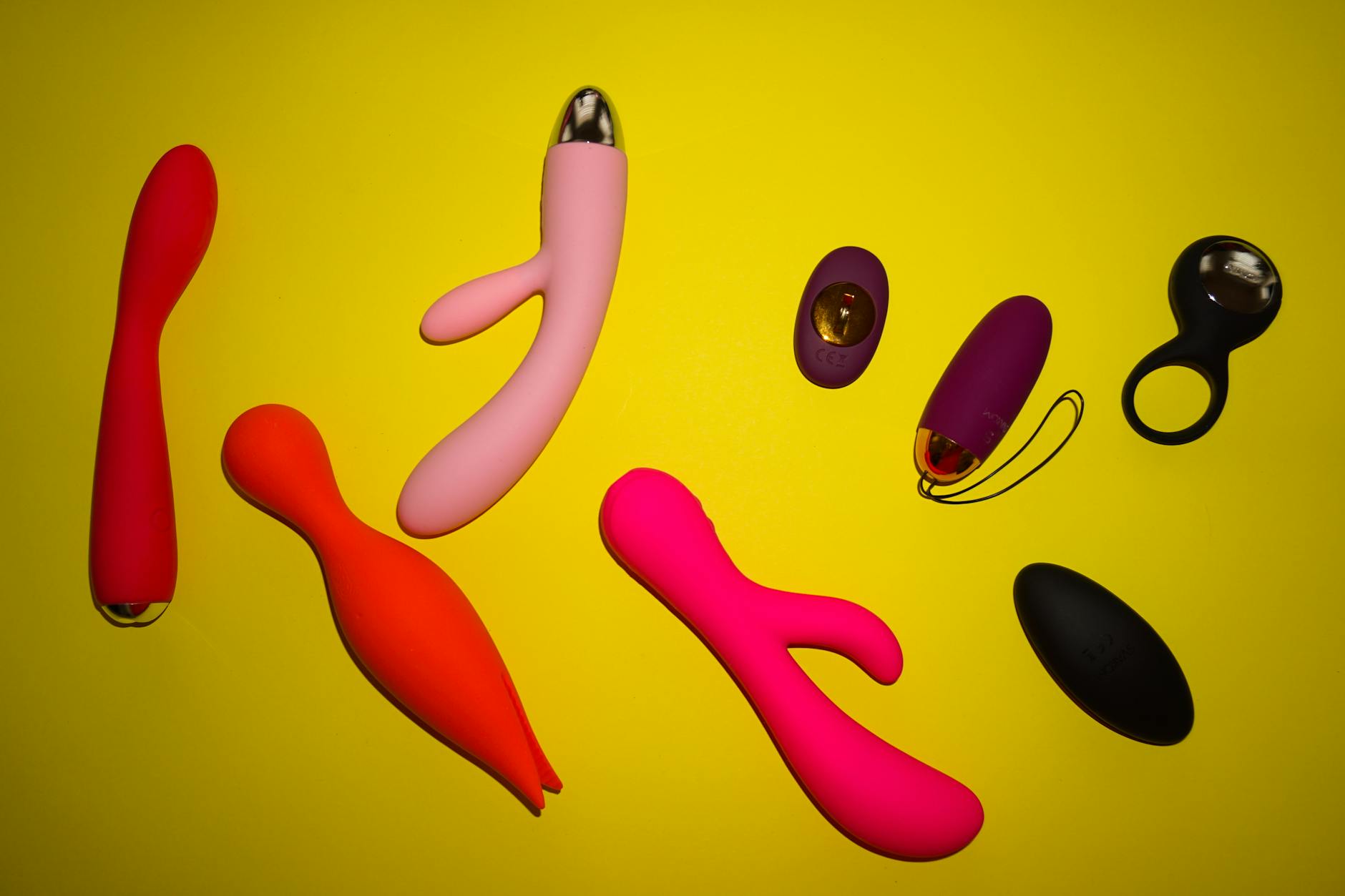
A lemon clitoral vibrator like the Lem uses air-suction technology to deliver focused, consistent stimulation directly to the clitoral glans. Here's why that matters when your sensation is muted during partnered sex:
First, it demands attention. Suction feels wildly different from partner touch. It's not something your brain can process passively. The sensation is specific and novel enough to pull your attention down into your body. That alone shifts your nervous system back toward parasympathetic activation. Your focus narrows. Your awareness sharpens.
Second, it's external to the performance. Using a clitoral vibrator during partnered sex creates what I call a "neutral third party." The stimulation isn't coming from your partner's hand or body, so there's no subtle pressure to respond in a particular way, no unconscious performance calibration. The Lem does what it does, and you're free to feel it without the social choreography.
Third, suction bypasses desensitization. Partner touch that feels too light gets filtered out when your nervous system is in alert mode. You need more pressure to feel something. But increased pressure from a hand often triggers more self-consciousness, not less. Air-suction technology delivers stimulation through a mechanism your partner's body can't replicate, so it feels distinct enough to break the pattern of muting.
Honestly, the setup matters more than the technique.
Start by talking about this beforehand, outside the bedroom. Use the language of sensation recovery, not performance repair. "When you touch me during sex, I lose sensation. It's a nervous system thing, not a response to you. I want to try using the Lem during foreplay to help me stay present." Frame it as a tool that helps both of you, not a workaround for your partner's limitations.
When you're together, use the Lem during the early-arousal phase, before penetration happens. This is when your nervous system is still calibrating. Five to ten minutes of direct clitoral suction while your partner touches your body elsewhere (your breasts, your neck, your inner thighs) helps your brain recognize that pleasure is safe even when you're being perceived.
Start on the lower intensity settings. Pattern 1 or 2. The goal isn't to chase orgasm yet. It's to rebuild the connection between your clitoris and your attention. You're training your nervous system to stay in parasympathetic activation even when a partner is present.
Once you feel sensation returning and your arousal building, you can experiment with what happens next. Some people continue using the Lem during partnered sex. Others find that after five minutes of rebuilding the signal, they can return to partner touch and feel it more clearly. There's no single right move. The point is that you're in control of the stimulus intensity and type.
Using a clitoral vibrator during partnered sex often creates a subtle but important psychological change. You're choosing to include this tool. Your partner isn't deciding to "fix" you with it. That agency matters. When you're the one holding the Lem and deciding when to use it and for how long, your nervous system reads that as safe. You're not being acted upon. You're acting.
That sense of control often bleeds into the rest of the experience. After a few sessions of using the Lem to recalibrate, you might find that sensation stays clearer even when you return to partner touch alone. You've essentially trained your nervous system that it's safe to receive pleasure while being perceived. The tool becomes less critical because the underlying nervous system pattern has shifted.
This doesn't happen instantly. Some people notice a difference in one or two sessions. Others need four or five. Nervous system recalibration takes time and repetition.
If your partner pushes back on using a lemon vibrator during sex, that's worth examining separately. Sometimes it's a genuine lack of understanding ("Why do you need this if I'm here?"). Sometimes it's insecurity masked as practical concern. If the resistance is strong, it might point to a deeper dynamic issue about control, pleasure ownership, or your partner's comfort with your autonomy. That's exactly the kind of thing worth unpacking with a couples' therapist or in a direct conversation grounded in your needs, not their fears.
You deserve to feel pleasure during partnered sex. That's not negotiable. The tools that help you access it are a secondary detail.
Your nervous system interprets being perceived as a mild threat, which shifts blood flow and attention away from your clitoris toward your body's alert systems. It's not a physical problem. It's a nervous system activation pattern triggered by the presence of another person, even if you feel emotionally safe with them.
Sometimes, but usually not without additional support. A partner can slow down, use lighter touch, or try different patterns, and that might help. But if the numbness is driven by your nervous system being in alert mode, technique adjustments alone won't resolve it. You need to address the nervous system activation directly, which is where tools like the Lem come in.
Not necessarily. For many people, using the Lem regularly during early sessions helps retrain the nervous system. After a few weeks, sensation often returns clearly during partner touch alone. The tool becomes less critical because the underlying pattern has shifted. That said, some people enjoy using it as part of their regular partnered play. There's no "should" here.
No. It means your nervous system has a specific activation pattern that responds to direct, consistent stimulation. That's not a comment on your partner's skill or desirability. People use clitoral vibrators in partnered sex for many reasons. Sensation recovery is one of them. Intensity preference is another. Exploring new sensations together is another. It's not a replacement for your partner. It's an additional tool.
Lead with your own experience, not their performance. "I've noticed my sensation drops when we're together, and I want to explore why. I'm thinking of trying the Lem during foreplay to see if direct stimulation helps me stay present. This isn't about what you're doing wrong. I just want to feel more during our time together." Focus on your pleasure recovery, not their technique.
Absolutely. Antidepressants, certain blood pressure medications, and chronic stress can all dull clitoral sensation. If numbness is happening across all contexts (solo and partnered), or if it's a recent change, it's worth talking to your doctor before assuming it's a nervous system partnered-sex pattern. That said, even if medication or stress is the underlying cause, using a lemon clitoral vibrator can still help you feel sensation more clearly during partnered sex.
Very. One of the most underreported experiences in partnered sex is exactly this: sensation that appears and disappears based on context. Most people don't talk about it, so it feels isolating and weird. It's neither. It's your nervous system doing what nervous systems do when they detect a shift in threat level.
Numbness during partnered sex isn't a permanent condition. It's a nervous system pattern that responds to the right interventions. Sometimes that's nervous system work like grounding or breathwork. Often it's the strategic use of focused, direct stimulation during the early arousal phase, which is exactly where a lemon clitoral vibrator comes in.
The Lem gives your nervous system a clear signal that pleasure is available and safe, even when someone is present. Over time, that signal becomes internalized. Your brain learns that it can stay in parasympathetic activation even while being perceived. And sensation returns to the baseline you're accustomed to.
If you're experiencing this, you're not broken. Your body isn't failing you. It's doing what bodies do: protecting you from perceived threat. The good news is that bodies also learn. And they learn quickly when given the right feedback.
Ready to explore how direct clitoral stimulation can work for your specific situation? Reach out to us and let's talk about what might help.
Gottman, J. M., & Silver, N. (2015). The Seven Principles for Making Marriage Work. Harmony. (Research on couples dynamics and nervous system activation during intimacy)
Van Der Kolk, B. (2014). The Body Keeps the Score: Brain, Mind, and Body in the Healing of Trauma. Viking. (Nervous system activation patterns and dissociation)
Brotto, L. A., Atallah, S., Johnson-Agbakwu, C., Rosenbaum, T. Y., & Tan, R. B. (2016). Psychological and interpersonal dimensions of sexual function and dysfunction. Journal of Sexual Medicine, 13(4), 538-571. (Partnered sex sensation patterns and nervous system response)
Commission on Human Sexuality, The American College of Obstetricians and Gynecologists. (2019). Sexual dysfunction in women: Clinical evaluation and treatment. Obstetrics & Gynecology, 133(6), e437-e445. (Clinical assessment of sensation changes in sexual response)