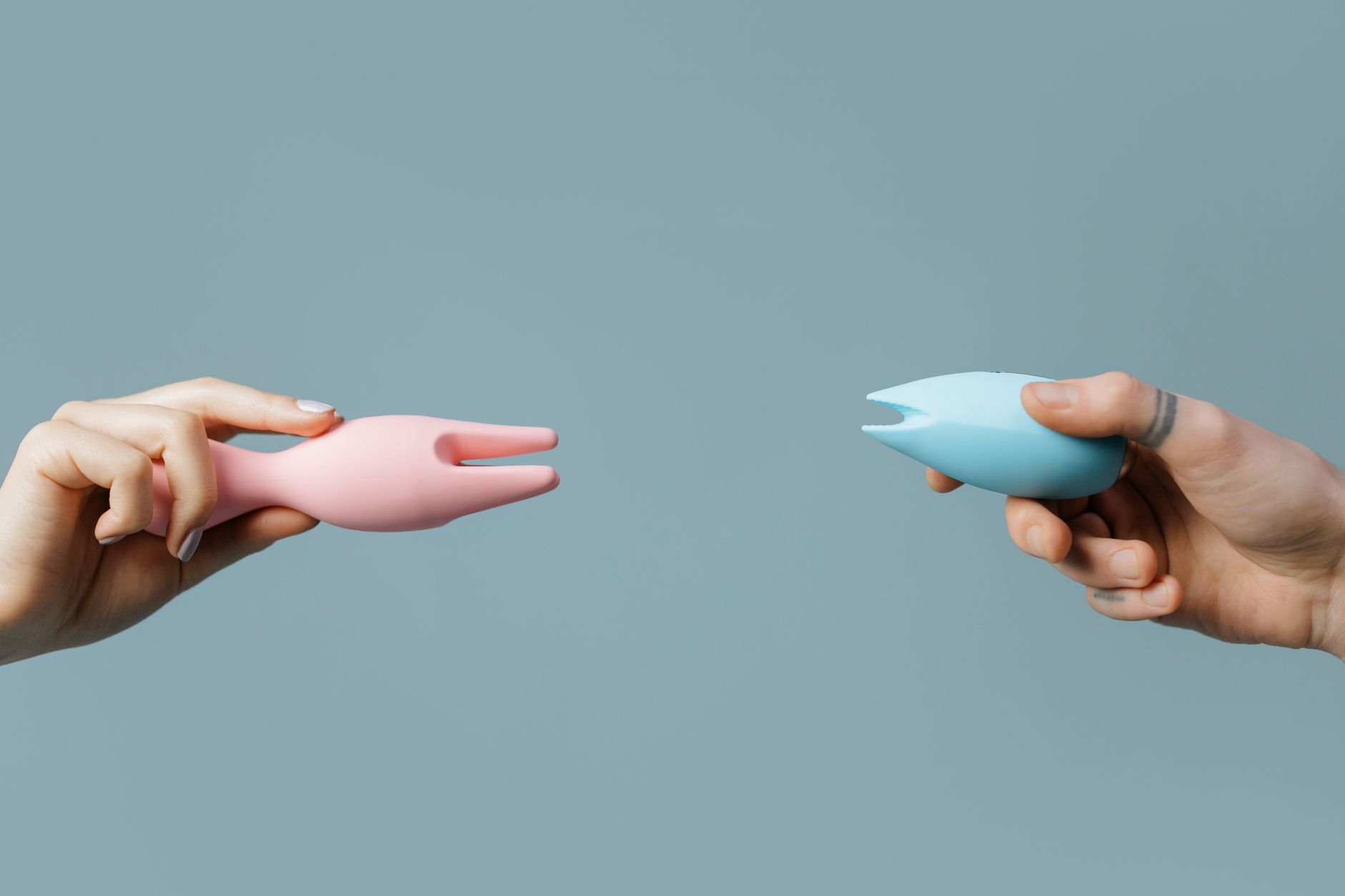
Let's start with what your partner is actually afraid of
Honestly though. When someone says "I don't want a toy in our sex life," they're almost never actually afraid of silicone. They're afraid they're not enough. That you're looking elsewhere because something about them or what they do isn't working. That introducing a vibrator means the relationship is broken and needs fixing.
That fear is real. It's not irrational. And it's also almost completely untrue.
Here's the thing nobody tells you: the resistance is rarely about rejection of the toy itself. It's about rejection anxiety. The story your partner is telling themselves is "my partner wants this because I'm failing," and until you address that story directly, no amount of reassurance about how vibrators work will land.
The mistake most people make
People usually start with the mechanics. "Babe, I read that clitoral vibrators actually make orgasms easier for a lot of people, and I think it could be really fun if we explored that together." Totally logical. Completely ineffective.
Why. Because you've led with the toy, not the relationship. Your partner hears: "You're not making this easy enough. This thing will." Even if you didn't say that, the architecture of the conversation puts them on the defensive.
The move is to flip the script entirely. You're not introducing a toy because something's missing. You're introducing an idea: that pleasure in your relationship is worth exploring together, and you want to do it with them.
What the conversation actually sounds like
Start with vulnerability, not information.
"I want to talk about something, and I need you to know this isn't about you not being enough. It's actually the opposite. I feel really connected to you sexually, and because I do, I want to explore more with you. Together."
Pause. Let them land that.
"I've been reading about some things that other couples have tried, and honestly, I'm curious. But here's the thing. I don't want to do this without you being into it. I don't want you to feel like you're being replaced by anything. I want you to want to explore it too."
Again. Pause.
"Before I even tell you what I was thinking about, I want to know. What's your gut reaction to that idea. Not the specifics. Just... would you be open to that conversation?"
You're not asking them to say yes to a vibrator. You're asking them to say yes to the conversation. That's a much smaller ask.
When they say no (and they might)
If the answer is "I'm not comfortable with that," the worst thing you can do is push. The second worst thing you can do is accept it silently and resent them.
The right move is curiosity without pressure.
"That's fair. Can I ask what the hesitation is. Not to argue you out of it. I just want to understand where you're coming from."
Listen. Actually listen. Don't interrupt. Don't defend yourself. Let them name the fear.
If they say "I feel like I'm not enough," you now get to address that directly. "That's not what this is about for me. I want more pleasure in our sex life, yes. But not because you're failing. Because I want more connection with you."
That's different from the abstract pitch. That's responsive to their actual fear.
The permission slip approach
Some people need to hear it from someone else first. I've worked with couples where introducing the idea that experts actually recommend this helped shift the frame from "my partner's being weird" to "oh, this is a normal thing other people explore."
You can reference research. "I read that adding vibration to partnered sex actually increases reported satisfaction for both people, because the focus shifts from performance pressure to shared pleasure." That's true, and it reframes away from "I want this" and toward "this is something that helps couples."
But the real permission slip, the one that moves people, is this. "I just want you to know that me wanting to explore doesn't mean I'm not satisfied with you. It means I value the relationship enough to keep investing in it. I want to find new ways to enjoy each other."
The tangible first step that works
Here's what usually breaks the logjam. You don't start with the toy. You start with education.
"Can we just read something together about this. Not to convince you. Just so we're working from the same information."
Read an article. Talk about what resonated. What didn't. What felt true, what felt off.
Then, after that conversation has happened, after they've heard that clitoral vibrators like the ones from Lem Vibrator actually work differently than they might think, after they've had space to ask questions. Then you can say, "So if we wanted to try something, what would make you feel comfortable exploring that."
You're not surprising them anymore. You've already gone through the discovery together.
Why the reframe matters so much
In my practice, I see couples get stuck on toys when the real issue is communication. The vibrator becomes a symbol of something deeper. Either "I need more pleasure in this relationship" (which is valid) or "I'm not getting what I need from you" (which is different and scarier).
If it's the first, frame it that way. "Our sex life matters to me, and I want to keep growing together."
If it's secretly the second, the toy won't fix it. You need to have that conversation too.
Moving from no to maybe
If your partner is resistant but not a hard no, movement usually happens through exposure, not pressure.
Mention it casually sometimes. "I saw this article about couples who use clitoral vibrators and how it actually decreased performance anxiety for the guy because there's less pressure on him." Not pushing. Just offering information.
Talk about your own pleasure without making it about the toy. "I've been thinking about what gets me off, and I realized I want to explore that more." That conversation is separate from the toy conversation, but it opens the door to the idea that your pleasure matters, and that's not a threat to them.
If they bring it up, take it seriously. "I was thinking about what you said about vibrators..." That's them processing. Answer honestly. Don't minimize their concerns, but don't give them more reasons to be afraid either.
When you've done everything right and they still say no
Sometimes people need more time. Sometimes they need to see that their partner isn't going anywhere. Sometimes they need their own therapy to work through why the idea frightens them.
In those cases, you have a real choice to make. Is this important enough to you that the relationship needs to shift. Or is it something you can set aside for now, knowing it might come up again.
There's no universal answer. But I will say this. If you approach the conversation with genuine connection and without ultimatum, and your partner still refuses, that tells you something about how they handle conflict and intimacy. That's valuable information.
More often though, what happens is this. You have the conversation right. Your partner sees that you're not trying to replace them. You're trying to deepen things. And somewhere between the second and fifth time you bring it up, the resistance softens.
Then they might ask to look at one together. Then they might say "okay, maybe we could try something." Growth happens slowly in relationships. That's not a bug. That's the point.
FAQ
What if my partner thinks vibrators mean the relationship is failing?
That's the fear you need to address head-on. Say this. "I want to be clear. I'm not bringing this up because something's wrong. I'm bringing it up because something's right. Our sex life is important to me. And I want to keep exploring and growing in that area. With you." The story they're telling themselves is that you're dissatisfied. You're actually saying you're invested in the relationship enough to prioritize pleasure.
How do I introduce the idea without making them feel attacked?
Don't lead with the toy. Lead with the relationship. "I want our sex life to stay exciting. I want to keep discovering things together. And I'd like to explore some options that other couples have tried." Make it collaborative, not corrective. You're not saying "we need to fix this." You're saying "I want to keep investing in us."
What if they say they're worried the vibrator will replace them during sex?
That's a real logistics question. Answer it. "The idea would be that we use it together. I'm not trying to bring this into our bed and not have you be a central part of it. If anything, I want it to be something we do together." Or be honest. "I might want to explore it solo sometimes too. And that doesn't mean I want you less. It means I want to understand my own body better, so I know what I like. Which makes sex with you better."
Should I buy a vibrator without asking and surprise them?
No. Absolutely not. That reads as disrespect of their boundary, which is the exact opposite of what you're trying to communicate. You need their consent to bring a vibrator into your shared sexual space. Getting it without asking breaks trust, even if the intention is good.
How long should I wait before bringing this up again if they say no the first time?
That depends on the relationship. If they said "absolutely not, never," give it real time. Months. Then, if circumstances shift or you feel it's important, ask if they're open to revisiting the conversation. If they said "I'm not sure" or "I'm not ready," you can circle back in a few weeks. The key is not making it feel like you're pressuring them or refusing to accept their answer. You're giving them space to evolve.
What if I'm the one resistant and my partner wants to try toys?
That fear you're feeling. Sit with it. Where is it coming from. Are you worried you're not enough. Are you worried about performance. Are you worried about what it means about your sexuality or your relationship. Once you know the real fear, you can address it. And you can ask your partner to help you feel safe while you explore it. That's the conversation that actually works.
Is there a specific vibrator that's easier for partners to accept?
Something like a Lem vibrator can actually help because it's not a dildo. It's a clitoral stimulator. The mechanism is different. It's not about penetration or replacement. It's about a specific type of stimulation that's localized and designed for external pleasure. Partners sometimes feel less threatened by that than by other toy designs, but honestly, the design of the toy matters less than the design of the conversation. Get the conversation right first.
What if my partner wants to try toys but I'm worried it means they're not satisfied with me?
Welcome to the flip side of this anxiety. It's the same fear, just coming from the other direction. Here's the truth. Someone wanting to explore toys doesn't mean they're not satisfied with you. It means they want to explore pleasure. Full stop. If you need reassurance, ask for it directly. "I want to do this with you, but I need to hear that you're happy with what we have." That's a conversation too. And it's allowed.