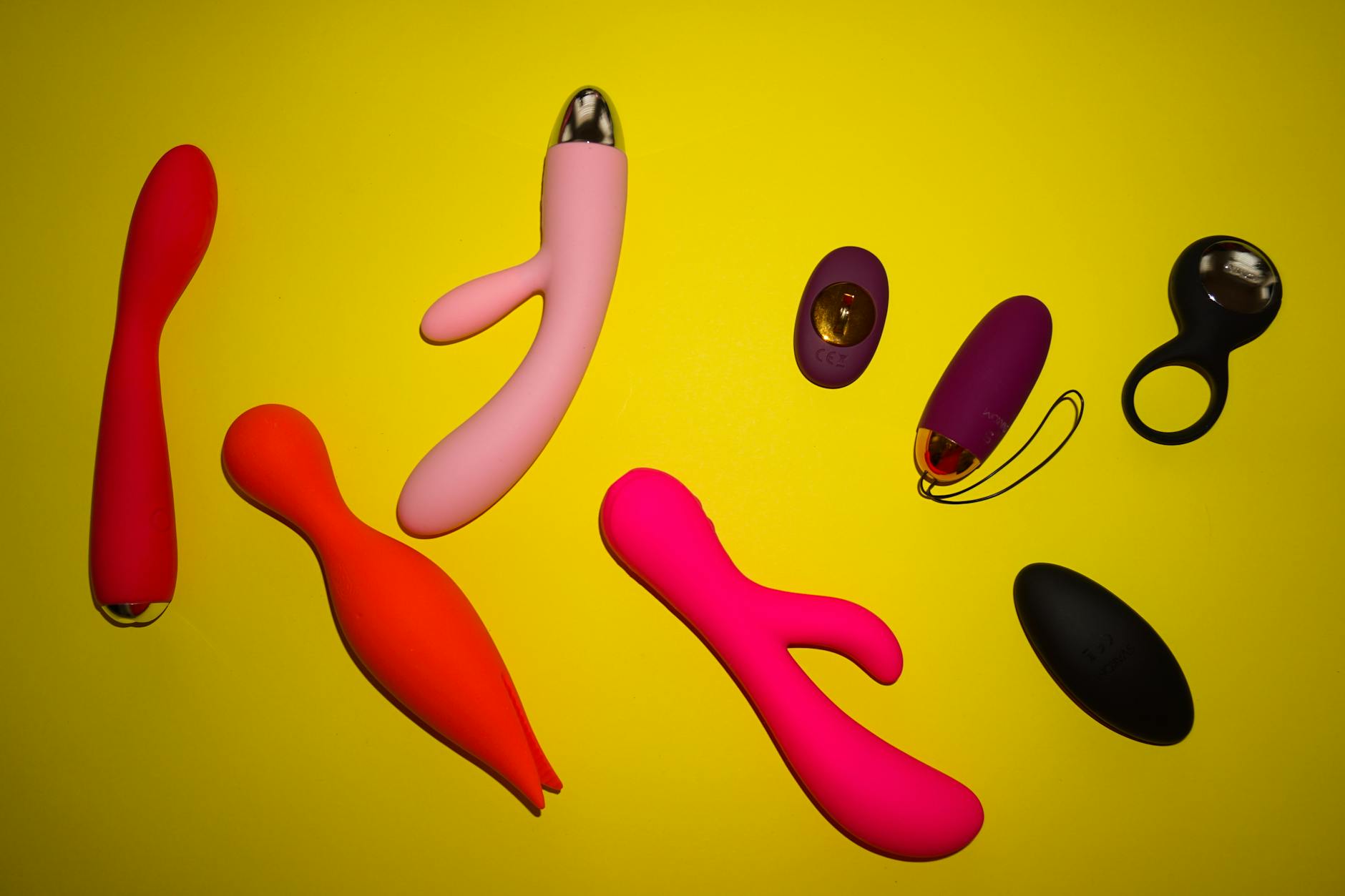
How to Rebuild Physical Intimacy After Years of Disconnect With Lemon Vibrators
Let's be real. When couples stop having sex, they usually don't talk about restarting it. The gap widens. Months become years. Touch becomes something that happens in passing. Then one person mentions it, or one person doesn't, and the awkwardness calcifies into something that feels impossible to fix.
Here's the thing though: it's not impossible. But it does require you to unlearn the shame part first.
The anatomy of disconnection
Physical disconnection in long-term relationships almost never starts with sex. It starts with conversation. One partner pulls back. The other interprets it as rejection. Then both people start protecting themselves. Sex becomes a minefield. Touching becomes risky. Eventually, the reflex to reach for each other just dies.
The emotional distance comes first. The physical distance is the symptom, not the disease.
What I see in my practice is couples who've been disconnected for five, ten, sometimes fifteen years. They're not broken. They're just scared. Scared of rejection, scared of disappointing their partner, scared of discovering that the desire is actually gone for good. So they don't try. And the fear becomes true by default.
Why starting over requires permission, not pressure
Most couples try to restart sex the same way they stopped it: with pressure and expectation. "We should do this." "We haven't in so long." "Let's try this weekend." This turns sex into another obligation, another thing you're failing at together.
What actually works is permission. Permission to go slowly. Permission to not go all the way. Permission to feel awkward. Permission to stop.
When you remove the goal of sex, something shifts. You can just touch again. You can remember what your partner's skin feels like. You can laugh when it's weird, because it will be weird at first. That's not a failure. That's the process.
How to have the actual conversation
Pick a time that's not in bed. Not during a fight. Not when you're both rushing out the door. Sit down. One person goes first.
Try something like this: "I miss being close to you. Not just sex, but touch. And I think I'm scared that we've been apart so long that it won't feel natural anymore. I don't want that to be our story. I want to try again, but I need to know you're open to it."
Then listen. Really listen. Your partner might say they're scared too. They might say they feel disconnected from their own body. They might say they don't know how to start. All of those are normal. All of those are fixable.
You're not trying to fix the whole relationship in one conversation. You're just saying: I want to try. Are you in?
The rebuild: tiny, intentional touch
Start with something that's not sex. Hand-holding while you watch something. A full hug that lasts longer than usual, like actually holding each other for a few seconds. A back massage with no expectation attached.
The goal is for both of you to remember that touch can feel good without leading anywhere. Because after years of disconnection, there's often this unconscious rule: if we touch, it has to be sex. So nobody touches. This breaks that rule.
Do this for a few weeks. Really. Weeks. Not days. Your nervous systems need to recalibrate. Touch is a language your bodies have forgotten how to speak.
When you're ready to restart physical pleasure
If you're both ready to move toward actual sex or pleasure, start solo first. This might sound counterintuitive, but it works. Each of you reconnects with your own body separately. You remember what feels good. You're not performing for anyone. You're not worried about your partner's timeline.
Then you bring that knowledge back to your partner.
Some couples find that using tools like lemon vibrators helps here. A clitoral vibrator can restart sensation that's been dormant. It removes pressure because it's not about your partner's timing or performance. It's just physics. Consistent stimulation. A lemon vibrator like the suction-based design takes the guesswork out. You're not both trying to figure out what works at the same time. You already know.
Rebuilding together: when you're both ready
Once you've reconnected individually, you can reintroduce pleasure as a couple. And this is where communication matters more than technique.
"I want to be with you. No pressure to finish. We can stop whenever. I just want to feel close again." Say things like that. Out loud. It sounds corny. It works.
If you're using a lemon vibrator or any other tool, the conversation shifts from "Does this work for you?" to "Should we try this together?" It becomes collaborative. You're not trying to read your partner's mind. You're both figuring it out.
The emotional part that nobody talks about
Here's what surprises couples: restarting sex sometimes brings grief. You might feel sad about the years you missed. You might feel angry at your partner for withdrawing, or at yourself for not trying harder. You might feel both things at once.
That's not a sign you shouldn't be doing this. That's just what happens when you finally stop protecting yourself. Let yourself feel it. Tell your partner you're feeling it. Then keep going.
Physical reconnection is emotional work. You're not just restarting sex. You're rebuilding trust in your own vulnerability. That's the real thing happening underneath.
When to get help
If you've had the conversation and one partner isn't interested, that's a signal that something else is going on. It might be depression. It might be medication side effects. It might be resentment that needs addressing before physical intimacy can restart. In those cases, talking to a couples therapist or a sex therapist isn't a failure. It's actually the fastest path forward.
They can help you figure out what the real obstacle is. Sometimes it's not about sex at all. Sometimes it's about feeling heard, or feeling safe, or processing something that happened years ago that never got resolved.
The truth about starting again
Rebuilding physical intimacy after years of disconnect doesn't mean your sex life will look like it did before. It might actually be better. You know each other differently now. You're choosing each other consciously, not on autopilot. That changes things.
Start small. Be patient with yourself and your partner. Use whatever tools help, whether that's a lemon vibrator or just time and permission. The goal isn't to have perfect sex. The goal is to remember that you can touch each other again without it being weird or dangerous or sad.
Most of the time, you already have the desire. You just have to give yourself permission to act on it.
People also ask
How long does it take to rebuild physical intimacy after years of disconnect?
There's no fixed timeline. Some couples reconnect within a few weeks of intentional touch and conversation. Others take several months to feel comfortable again. Factors like trust issues, trauma history, medication, and how long the disconnect lasted all play a role. The important thing is consistency, not speed. Regular, small moments of connection matter more than forcing a big restart. If you're not seeing any progress after three months of genuine effort, talking to a couples therapist or sex therapist can help identify what's actually blocking you.
Can using a lemon vibrator help rebuild intimacy with a partner?
Yes. A clitoral vibrator like a lemon sucker can help remove performance pressure from both partners. Instead of worrying about technique or timing, you have a consistent tool. This takes the focus off "doing it right" and puts it on sensation and reconnection. That said, the vibrator isn't the point. The point is being together without judgment. The tool just makes it easier. Many couples find that restarting with a vibrator feels less vulnerable than starting with partnered sex, so it's a useful stepping stone.
What if my partner doesn't want to restart physical intimacy?
That's information. It tells you something needs to be addressed before sex can restart. It might be depression, medication side effects, unresolved resentment, past trauma, or simply a mismatch in desire right now. Have a separate conversation about what's actually going on. Don't frame it as "Why don't you want me?" Frame it as "I've noticed we're not connecting physically, and I want to understand what that's about." If there's no willingness to explore it together, a couples therapist can help create safety for that conversation.
Is it normal to feel awkward or embarrassed when restarting?
Completely normal. You've been apart. Your bodies have changed. Your preferences might have changed. What felt natural a decade ago might feel strange now. That awkwardness is part of the process, not a sign something's wrong. Laugh about it. Talk about it. Keep going. The awkwardness usually fades after a few times when you realize you're both in the same boat.
Should we talk to a therapist before trying to restart intimacy?
Not necessarily before. Many couples benefit from trying on their own first. They often rediscover connection without professional support. That said, if there's been betrayal, unprocessed anger, or significant conflict, a therapist can help you address those things first so you're not starting from a place of defensiveness. A few sessions can clear the ground. Then you try. If you get stuck, you go back. It's not all-or-nothing.
How do we know if physical intimacy is coming back or if the disconnection is permanent?
You'll know because you'll notice small changes. You'll initiate a hug and it doesn't feel like duty. You'll feel your partner's hand and actually notice it, instead of it being background noise. You'll want to be close. Those early signals of desire returning are usually more meaningful than the big moments. Pay attention to the small ones. They're telling you it's working.
Sources
Gottman Institute. (2024). The Four Horsemen and Relationships. https://www.gottman.com/
Perel, E. (2017). Mating in Captivity: Unlocking Erotic Intelligence. Harper.
Berman, L., & Berman, J. (2001). For Women Only: A Revolutionary Guide to Reclaiming Your Sex Life. Henry Holt.
Weiser, D. A., Avery-Smith, M. E., & Hanson, K. A. (2021). A systematic review and meta-regression of the relationship between smartphone use and well-being in couples. CyberPsychology, Behavior & Social Networking, 24(2), 98-106.